Home Blog Page 5

The Essence of Vinegrowing

0

A Conversation with Resit Soley

Preserving Heritage and Nurturing Culture

Q: Importance of Vinegrowing

R. Soley: Turkey, specifically the Anatolian Peninsula, is the cradle of vinegrowing and wine production. Stretching from southern Georgia to Armenia, Iran, Mesopotamia Resit Soley’s Mission in Turkish Viniculture, and aligning with the western regions, this area produces the finest grapes. The climate imparts unique characteristics to the grapes, making Anatolia a viticultural treasure. Despite possessing the world’s 4th or 5th largest vineyards, Turkey struggles to unlock the full potential of this valuable resource. Vinegrowing is not just a practice; it’s a cultural heritage that demands experience, patience, dedication, and a deep connection to the land. Unfortunately, these traditions are eroding as commercial paths gain prominence and younger generations lose interest in this labor-intensive work.

Q: Challenges in Utilizing Turkey’s Vine and Vinegrowing Potential

R. Soley: Preserving traditions in a rapidly developing world, especially in establishing traditional production methods, poses significant challenges. Younger generations often prioritize different lifestyles, making it difficult to sustain agricultural practices in villages or on islands. The essence of vinegrowing Istanbul Day Trip, rooted in cultural inheritance from father to son, faces a decline. The struggle to maintain this heritage involves various approaches, from hands-on experience and observational learning to scholarly studies. Vinegrowing is not a linear journey; it’s a continuous pursuit with no endpoint.

Q: Local Tastes of Bozcaada and Their Development

R. Soley: We hold a deep sensitivity towards preserving local tastes on the island. While Cabernet Sauvignon procedures have been performed for centuries with origins still undiscovered, we are conducting a long-term study on the island’s grape varieties. Vasilaki, one of the two whites on the island, and Qavus, suited for table wines, are integral to our exploration. The goal is to understand and enhance the unique flavors offered by Bozcaada’s vineyards.
Resit Soley’s Mission in Turkish Viniculture

0

Preserving Heritage and Quality

Elevated to the Advisory Board Focused on Turkish Wine Culture

Resit Soley, elected to the Advisory Board of the Wine Culture Project in Turkey, is actively engaged in promoting and preserving the rich wine heritage of the country.

Q: What role do you play in Turkish viniculture, and what initiatives are you involved in?

Resit Soley: Corvus, recognized by The Guardian Newspaper among the top ten vineyards globally worth visiting, signifies acknowledgment of our efforts. Ertugrul Ozkok, in one of his articles, stated, “I make peace with Turkish wines,” highlighting the growing acceptance of Turkish wines. While we concentrate on vinegrowing, we are equally committed to producing exceptional wines. In our first harvest, we proudly crafted the best wines in Turkey, a result of the favorable island microclimate and advanced technology. However, the essence lies in continuous dedicated efforts Reviving Bozcaada’s Wine Culture.

Preserving Local Grape Varieties A Commitment to Excellence

Efforts extend to maintaining local grape species, considered their greatest capital. Bozcaada boasts four unique grape species, a treasure that demands preservation. Despite commercial preferences for international species, Corvus takes a stand by announcing prices in advance, ensuring fair compensation for local grape growers. The island’s extraordinary vinegrowing features, with 300 to 500-year-old untouched vineyards, require protection Istanbul Tours Guide. Soley emphasizes the need to halt the island’s development to preserve these unique features, facing daily disturbances.

Challenges and Commitments: A Balancing Act

Corvus Vineyards not only produces high-quality wines but also addresses the challenges of sustaining local grape varieties and the island’s distinctive vinegrowing features. Resit Soley’s commitment goes beyond profit, reflecting a dedication to preserving Turkey’s wine heritage and promoting its cultural significance on a global stage.

Reviving Bozcaada’s Wine Culture

0

Corvus Vineyards’ Journey

Bozcaada A Haven for Vineyards

Architect Resit Soley embarked on a mission in 2002 – to revive Bozcaada’s ancient wine and vineyard culture, which boasts a rich history spanning 3,000 years. His vision goes beyond creating the best “white” wine in Turkey The Essence of Vinegrowing; it’s about restoring Turkish wine and vineyard culture to its rightful place on the global stage.

Forgotten Heritage The Decline of Turkish Wine

The origins of wine, produced through grape fermentation, are lost in the annals of time. However, Anatolian lands, where this culture thrived millions of years ago, have witnessed its decline and, in some ways, destruction. Illicit development, religious pressures, commercial interests, misuse of pesticides, and a disconnect from cultural roots have hampered Turkey’s ability to harness its viticultural potential. Yet, there’s hope if proactive measures are taken.

Resit Soley The Modern-Day Advocate for Turkish Wines

Resit Soley, the driving force behind Corvus Saraplari Istanbul Day Tours, assumes various roles – father, mastermind, vinegrower, producer, and architect – all in service to Turkish Wines and the country’s wine industry. He is the contemporary embodiment of Hayyam, Dionysos, and Bacchus, marching steadfastly towards a revival.

Interview with Resit Soley: Corvus and the Turkish Wine Industry

Q: Can you share the origins and current standing of Corvus Vineyards?

Resit Soley: Bozcaada has a wine industry with a legacy dating back around 3,000 years. Sadly, in the last few decades, as the Greek population diminished, this cultural heritage experienced a sharp decline. Having observed this process for 20 years due to my residence in Bozcaada, I felt compelled to take action. Our goal is not merely profit; our investment is about rewriting the island’s history. To this end, the Ministry of Foreign Affairs is working on a project to define Turkey’s wine paths and transform them into Wine Tourism.

Corvus Vineyards A Cultural Restoration Project

Corvus Vineyards, founded by Resit Soley, serves as more than a winemaking venture. It’s a cultural restoration project aimed at preserving Bozcaada’s historical viticulture, breathing life into a fading legacy, and contributing to the broader narrative of Turkish wines.

Unveiling Dulkadirli’s Hidden Treasure

0

Journey to Discovery A Warm Welcome

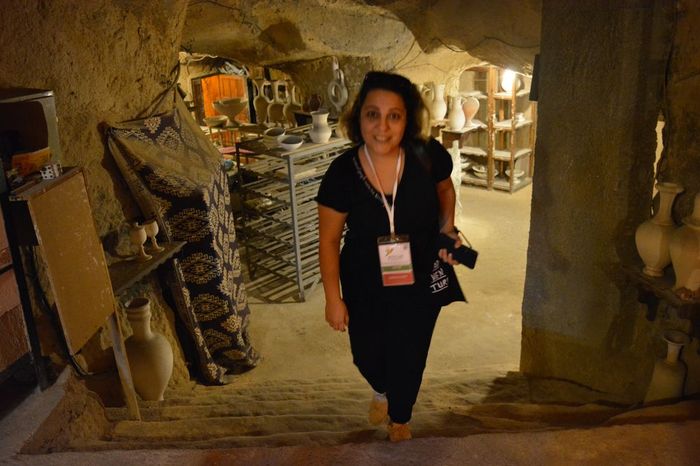
After enjoying the hospitality of the province, we embarked on an adventure to explore the Underground City. The tale of turning an ideal into reality unfolded before us. As we entered the Dulkadirli Underground City, known by locals as “bezirhane” (linseed oil mill), den, cave, or caravansary, we were met with boundless enthusiasm from those who played a pivotal role in revealing this hidden world. The cave’s breathtaking view gradually emerged, showcasing the dedication of municipal workers participating in their first archaeological excavation Read More about Dulkadirli Underground City, driven by a shared vision to shape the future of their province.

From Coop to Reality Mayor Dulkadirlioglu’s Vision

Mayor Selcuk Dulkadirlioglu passionately narrates the story that once earned him the label “foolish.” “When I was a child, we played games around this little cell where dogs gave birth, and we were afraid. Years later, abroad, I realized the significance of this place and the value of our historical legacy. It was used by locals to keep hens and plant seedlings. Dynamite explosions for construction stones and treasure hunting caused significant damage. Fortunately, Mahmut Dulkadir took a stand against further destruction, and we are grateful to him. Recognizing its importance for faith and cultural tourism, we transformed this seemingly cave into an underground city Private Guides Turkey.

Seeking support from various authorities, including the Ministry of Culture, Kırşehir Governorship, European Union, European Council, United Nations, and UNESCO, we’re thrilled to see the recognition of the Dulkadirli Underground City. We unveiled the 2nd floor and 60 rooms, concluding the cleaning process. Architects and engineers are amazed at the room designs. While many floors, rooms, underground galleries, and hidden passages remain undiscovered, Dulkadirli, home to the Underground City, stands as an ancient treasure.”

Dulkadirli Underground City

0

Discovering the Depths Exploration of the Underground City

In a groundbreaking effort, the mayor of Dulkadirli, Selcuk Dulkadiroglu, has uncovered the 2nd floor and 60 rooms of the Dulkadirli Underground City. Unfortunately, this historical site has faced devastation from treasure hunters and was even repurposed as a coop in the past. Now, Mayor Dulkadiroglu urges authorities to promote tourism in the region, shedding light on the untapped potential of this underground marvel.

Dulkadirli A Transforming Province

Dulkadirli, situated within the borders of Kırşehir, was once a humble village in Central Anatolia. The typical rural scenery featured hens, roosters, mud-plastered houses, dusty roads, and barren lands. However, the narrative changed for Dulkadirli Read More about Links Within the Palace, as it transitioned from a village governed by an alderman to acquiring the status of a municipality. Mayor Selcuk Dulkadiroglu, a Turkish language teacher with international experience, took on the role of mayor after returning from his ventures in Turkey, Germany, and Ireland.

Mayor Dulkadiroglu’s Vision

For Mayor Dulkadiroglu Private Guided Turkey Tours, Dulkadirli holds significant importance, exemplified by his determination to elevate the region. Fluent in English and German, he emphasizes his commitment, stating, “99 out of 100 anecdotes of the fox are about hens.” Undeterred by skepticism, he shares the initial reactions of the locals, who initially laughed and teased him. Over time, the community recognized the value of his efforts. With 20 individuals employed in the ongoing excavations, 20 families benefiting economically, and social security premiums being covered, the mayor’s initiatives not only contribute to preserving heritage but also positively impact the lives of the residents. As the path to faith tourism opens up, Mayor Dulkadiroglu envisions a brighter future for the region.

Links Within the Palace

0

Exploring Camlı Köşk

Connecting Spaces in Ottoman Splendor

Camli Kosk, linked to the Hususi Daire (Private Apartment) of the Sultan through a long, two-storey corridor passing through the garden wall that separates Mabeyn and Muayede Salonu, stands as a symbol of the Western architectural influence in the Ottoman era.

Camlı Köşk: A Glass Pavilion

The name “Camli Kosk” (Pavilion with glass) comes from the “glass greenhouse,” an iron construction linked to the Kosk. One façade faces Küçük Garden, while the other faces the road. The pavilion features a splendid pool with a crystal fountain at its center, complemented by a fireplace standing back to back with the one in the kosk. The use of glass and iron cast, products of newly developing Western technology, contributes to the unique charm of the building Read More about Unveiling Dulkadirli’s Hidden Treasure. The cast chandeliers, adorned with colorful crystal bird figures, enhance the splendor of Camli Kosk.

Open to Visitors: Aesthetic Splendor Unveiled

Camlı Kosk Private Golfing Tour Turkey, a harmonious blend of aesthetics and grandeur, has become an attraction for tourism in Istanbul. Inaugurated on September 25, 2003, in the presence of the Chairman of the Turkish Grand National Assembly, Bulent Arınc, Camlı Kosk opened its doors to visitors after many years. Explore the timeless beauty and historical significance of this glass pavilion within the Dolmabahce Palace complex.

Life in Bozcaada

0

Weaving History Through Collecting

Unveiling Bozcaada’s Rich Tapestry

In the pursuit of seashells, Hakan Guruney not only discovered the treasures of Bozcaada but also embarked on a profound journey into the island’s history. Through years of conversations and information gathering, he realized that the shells he found were not as rare as he initially thought; in fact, they were abundant on Bozcaada. This revelation transformed Bozcaada from a passing curiosity to Guruney’s new destination.

A Transformational Journey Guruney’s Dedication to Bozcaada

In 1997, Guruney, accompanied by friends from the association, returned to Bozcaada and eventually purchased a summer residence, marking the beginning of his deep connection with the island. Initially unaware of Bozcaada’s history, Guruney’s research led him to redirect his “unobstructed drive for collection” towards the cultural assets produced by Bozcaada’s residences Bozcaada Local History and Research Center. Each carefully collected piece became a window into Bozcaada’s rich cultural heritage, deepening Guruney’s understanding of the island.

Dreams of Preservation The Birth of BOYTAM

Driven by a vision to establish a research center, Guruney wished to exhibit his collection and create a space for preserving Bozcaada’s historical legacy. In 2003, he realized this dream with the establishment of the “Bozcaada Information and Documentation Center” (BOYTAM). This comprehensive center aimed to digitize archives, preserve photographs, and house a library Private Tours Istanbul, meeting hall, and working halls equipped with computers.

From Dream to Reality BOYTAM’s Historical Home

Initially, Guruney exhibited over 3,000 documents and objects in an old cottage on his land. However, with the efforts of Bilal Bozdemir, the Lieutenant Governor of the island, a more suitable and central location was secured. Guruney’s dream found a home in one of the houses in the Greek Quarter, rebuilt after the great fire in 1874. In 1917, this three-story house, once owned by a Greek family, had fallen into disrepair. After years of neglect, its restoration was completed in 2022, transforming it into the Bozcaada Local History and Research Center, a beacon preserving the island’s cultural heritage.

Bozcaada Local History and Research Center

0

Unveiling the Treasures of the Island

Whispers of the Sea The Passionate Collector’s Journey

In the heart of Bozcaada, both floors of BOYTAM (Bozcaada Local History and Research Center) unfold a vibrant tapestry of the island’s history and experiences. Hakan Guruney, an avid collector with a deep connection to the island, has transformed his passion into a rich collection that now finds its home in this center.

A Collector’s Genesis Pursuit of Seashells

Hakan Guruney’s journey began in 1992 when he set foot on Bozcaada in search of a seashell. Little did he know that this visit would mark the inception of his captivating collection. In 1998, Guruney acquired his first island-related item and decided to weave a comprehensive collection intricately linked to Bozcaada’s identity. As his collection grew, the need for a dedicated space led to the establishment of BOYTAM.

Seashells as Jewels of the Sea

Guruney identifies himself as a “fanatical collector,” a sentiment that has been ingrained since his childhood. His passion took an intriguing turn when he shifted from underwater spearfishing to the mesmerizing world of seashell collection. Describing seashells as “jewels of the sea,” Guruney embarked on a remarkable adventure along the Aegean and Mediterranean coasts, commencing in 1988. Over 12 different trips to 35 diverse locations, from Saroz to Yumurtalik Mugla’s Vision, Guruney amassed a staggering 220 different species of shells.

The Unforgettable Encounter Bozcaada’s Allure

Although Guruney’s initial trip to Gokgeada left him dissatisfied, fate had other plans. While exploring the collection of R. Tumturk, a renowned collector Private Tour Istanbul, Guruney’s attention was captivated by a seashell named Trivia Spongicola Monterosato 1923. Learning that only five samples of this minuscule shell had been collected due to its rarity, Guruney made it his mission to add one to his collection in 1991. A year later, he shared his significant discovery in an article published in Cumhuriyet Bilim Teknik magazine.

The Bozcaada Local History and Research Center stands as a testament to Hakan Guruney’s unwavering passion, preserving and showcasing the island’s treasures for generations to come. Through the whispers of seashells, the center narrates the captivating story of Bozcaada’s rich heritage.

Mugla’s Vision

0

Mugla’s Vision for Sustainable Development and Cultural Heritage

In the words of Mayor Dr. Osman Gurun, Mugla stands firm against the “hamburger culture and brutal tourism,” embracing its authentic identity and respecting its past. The mayor outlines three key priorities for the city:

University City and Cultural Tourism Hub: Mugla aims to maintain its status as a university city and foster cultural tourism. The focus is on preserving cultural values and steering clear of the negative impacts of mass tourism.

Cultural Center and Congress Tourism: The upcoming Cultural Center, set to open in the fall, positions Mugla as a candidate for congress tourism Life in Bozcaada. The goal is to attract domestic tourists, favoring small boutique hotels over larger, impersonal accommodations.

High-Tech Industrial Hub: If industry is to thrive in Mugla, the aspiration is to host high-technology developments akin to Silicon Valley, aligning with the city’s vision of being a town of culture rather than an industrial center.

Mugla’s Remarkable Features

Longest Shoreline in the World: Mugla boasts the longest shoreline globally, stretching 1124 kilometers from Milas-Akbiik Bay to the border of Antalya at the E§en Creek opening.

Two Seas: Bordering both the Aegean and Mediterranean, Mugla offers diverse coastal landscapes.

Six Peninsulas: Home to six picturesque peninsulas, including Bodrum, Datga, Marmaris Bozburun, Marmaris Karadag, Dalaman Kapukargin, and Fethiye Kayakoy.

Four Bays: Gulluk, Gokova, Marmaris, and Fethiye bays are prominent and significant regions.

Rich Island Heritage: With a total of 61 islands, Mugla’s islands, including Gocek, Pig’s Island, Sedir Island, Karaada, Kardak, Kargi, and Palamutbuku, add to its allure Private Guide Turkey.

Famous Marinas: Top-notch marinas like Bodrum, Datga, Marmaris, Gocek, and Fethiye contribute to the city’s maritime charm.

5400 Years of History: The city boasts a rich history dating back to 3400 B.C., with influences from Karya, Ion, Dor, Rome, Byzantine, Mentege Kingdom, and Ottoman civilizations.

Abundant Archaeological Sites: With 150 archaeological sites, Mugla is a treasure trove of ancient cities and historical landmarks.

Sea of Trees: Approximately 68% of Mugla’s land area is covered with forests, enhancing its natural beauty.

Winter Tourism: Catering to winter enthusiasts, Mugla features two ski resorts in Sandiras and Mount Eren.

Alternative Sports Haven: Babadag is an internationally acclaimed paragliding venue, attracting adventure seekers from around the world.

Two International Airports: Bodrum and Dalaman airports serve as vital gateways, facilitating the influx of visitors.

Marble Mines Hub: Holding 40% of the world’s marble capacity, Mugla contributes significantly to the global marble industry.

Traditional Architecture Hub: The city center of Mugla boasts 400 buildings registered as 1st degree historical work, showcasing its commitment to preserving traditional architecture.

Preservation Site: Recognized as an urban, natural, and archaeological preservation site, Mugla takes proactive measures to safeguard its unique heritage.

Mugla, with its myriad features and visionary leadership, is carving a path towards sustainable development, cultural preservation, and responsible tourism.

Chronicle of Theoderic’s years in power

0

Our chief sources for the story of Boethius’s end are two. The first is the Anonymus Valesianus, a chronicle of Theoderic’s years in power. It gives Theoderic’s story as an Othello-like tale—virtue and success coming to a tragic end as bad blood wins out over good intentions. The unnamed author, who was an eyewitness to at least some of Theoderic’s story, was already the source for our account of Theoderic’s grand visit to Rome in 500 and was at that point still making Theoderic wise, humane, benevo¬lent, and just. With the rise of Eutharic—this is also the source that makes him a zealot for Arian religion—things begin to sour for this chronicler, consistent with Theoderic’s reactions to events he saw unfolding in the world around him.

The other source is far better known: Boethius’s Consolation of Philosophy, one of the gems of western literature by any standard, pervasively influential in much late medieval philosophical and religious understanding. It is a gorgeous book, deserving wide readership: “A golden volume, not unworthy of the leisure of Plato or Tully [Cicero],” said Gibbon. “To acquire a taste for it is almost to become naturalised in the middle ages,” added C. S. Lewis. To write so beautiful, wise, and resigned a book assures you of the goodwill of all the later generations of scholars, fitting you comfortably into the pigeonhole reserved for sages and scholars travel bulgaria.

But the Consolation is also a disingenuous book, and it has deceived many. What story can we piece together from these texts and the brief mentions of a few other sources? Why did Boethius have to die?

In the early 520s, Theoderic became more and more suspicious of those around him, and with good reason. His planned succession—a son-in-law and a grandson—failed when Eutharic died by about 523. Theoderic realized he would leave behind an infant grandson, Athalaric, in the care of a strong-willed daughter, Amalasuntha. Who would accept his regime?

Romans of Rome

The military could well want a stronger hand in command; and the old Romans of Rome, believing what Theoderic had long wanted them to believe—that nothing had really changed and that they were still citizens of a civilized Roman empire—would have their own ideas about an appropriate successor.

Boethius, meanwhile, was in the ascendant. As we have seen, he had been consul in 510, and in 522 saw his own two sons share the consulship— an almost unheard-of achievement for men who were not emperors or kin of emperors. In Ravenna to serve as master of offices under Theoderic, he was the second-ranking civil dignitary of the imperial government. In his forties at this point, he was the most prominent citizen in Theoderic’s realm. Liberius might have come closest, but was far less rich, had never been consul, and was away across the Alps in Gaul, far from the court Anastasius reneged.

Then the suspicions began

To hear Boethius tell it, he was surrounded by enemies even though he himself embodied selfless honor and justice. He had repeatedly thwarted the barbarous greed of royal officials with the grating names Cunigast and Triguilla, while persuading the king to prevent his praetorian prefect from imposing draconian measures to remedy a threat of famine in Campania. He protected the virtuous, such as the former consuls Paulinus and Albi- nus, from those who would ruin them. Even so, he made more enemies, and Basilius, desperate for relief from loan sharks, filed accusations against Boethius, while two other shady characters, Opilio and Gaudentius, on the verge of exile for their crimes, took refuge in a church to avoid deportation. Then on the day when they would have been branded and driven out of Ravenna, they bargained for their immunity, as we would say nowadays, by making their own string of accusations against Boethius.

And what did they accuse him of? I do not see that anyone has ever thought to be puzzled by Boethius’s somewhat unhelpful answer: “We are said to have wished that the senate be safe.”31 And just how did he attempt to ensure the senate’s safety? “We were accused of having stopped an informer from producing evidence that would convict the senate of the crime of maiestas”—that is, of attacking the intrinsic authority of the throne. He passed over, without deigning to comment (an old rhetorical trick), “the counterfeited letters that made it look as if I were daring to hope for liberty for Rome.” And just how does he deal with that accusation? “As if there were any liberty left to hope for! ”