Home Blog Page 4

Bulgarian Resistance and Casualties

0

After the attack, between thirty and forty Bulgarians were killed by the Turks, either while resisting arrest or trying to escape. The involvement of a wealthy and well-known Bulgarian merchant in the attack shows that it is almost impossible for any Bulgarian, no matter their status, to avoid being caught by the Komitaji (Bulgarian revolutionary groups) Monastir A Divided and Violent Town.

Mourning and Retaliation

After the events in Salonika, all Bulgarian schoolteachers in the Dede Aghatch province wore mourning clothes for forty days to honor those who had died.

The Village of Banitsa

In the village of Banitsa, near Seres, two Bulgarian “bands” were surrounded by Turkish soldiers. After heavy fighting, most of the band members were killed, as well as many of the village men. Around thirty or forty women were assaulted, and most of the houses were burned down. Only 22 out of 170 houses remained. In the Seres region, 1,600 houses were burned. Of those, only 109 were Turkish; the rest were Bulgarian Istanbul Tour Guide.

Torture in Konski

In the village of Konski, three Bulgarian peasants were tortured by Turkish officers searching for weapons. They were stripped, tied up, and placed on hot embers. A woman was also burned on both her arms. This was done as punishment for the Bulgarian attacks on Salonika.

Provoked Violence and Retaliation

Mr. Consul-General Graves wrote to the British Foreign Office, explaining that most of the crimes committed by the Bulgarians were provoked by the Patriarchists (Greeks). The Greeks were trying to take back schools and churches that had been taken over by the Bulgarians during the conflict.

The Bulgarians fought back in retaliation. Later, Graves reported that a Bulgarian revolutionary had documents on his body, including petitions in both Bulgarian and Turkish. The petitions asked for the inhabitants of Greek-controlled villages to be placed under the authority of the Bulgarian Exarchate (Bulgarian Orthodox Church). The documents also included secret instructions on how to force people to sign these petitions.
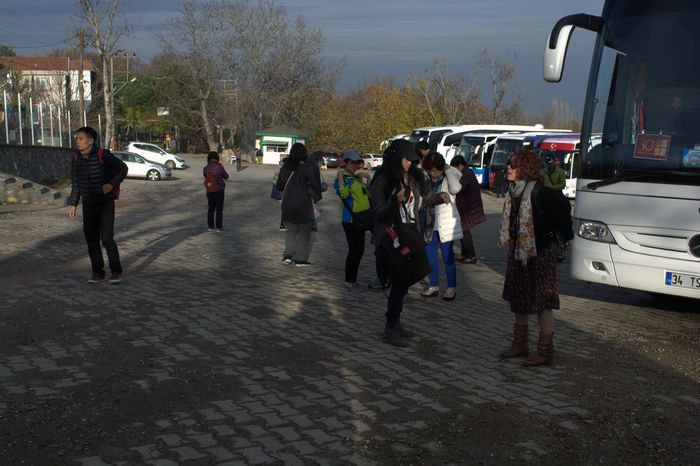
A Turkish Welcome

0

Not long before my arrival, Bulgarian revolutionaries had tried to help their friends in Macedonia by blowing up a bridge on the railway line to Constantinople. Now, the Turks were on high alert, watching closely.

I was expected in Adrianople. The train barely slowed down when I was greeted by a man with a black beard and a red fez. “Sir,” he said, “I am the dragoman to the Consulate of His Britannic Majesty.” Behind him stood the Consulate kavass, a tall and fair Circassian, wearing a blue uniform with a gold-strapped sword and the British arms on his fez A Diverse Population in Adrianople.

There was some confusion among the Turkish officials over passports and baggage. They thought I was an important person. They saluted me and showed great respect. I offered my passport, but they didn’t even look at it. They had received a telegram from the frontier saying that I was “a great English lord” and should be treated with courtesy. They didn’t want to open my baggage. Instead, they sent soldiers to handle it, and a carriage and pair were waiting for me.

A Quiet Night in Adrianople

Adrianople was two miles from the station. It was pitch dark when I arrived. The only people around were the guards, who eyed the carriage, but as soon as they saw the kavass, they stood at attention. We rattled through the quiet streets, with no lights except for faint flickers in the guardhouses Mystical Bulgaria Tours.

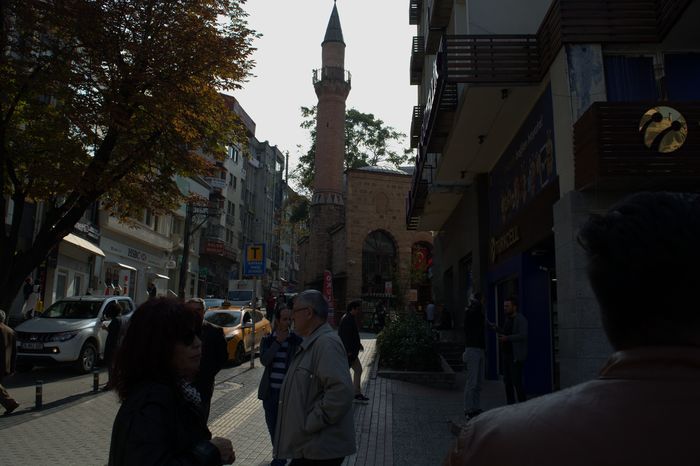
The next morning, when the air still smelled fresh, I wandered through the narrow, crowded streets of Adrianople. Despite their roughness, the city was made beautiful by the grand domes of the mosques and the tall, delicate minarets reaching up into the blue sky.

The Bustling Streets of Adrianople

0

The scenes in Adrianople were full of typical Turkish disorder and laziness. The streets were crowded with people, but they looked unkempt and disorganized. Most of the men were half-dressed, and the women were covered up as though they were trying to hide their carelessness. The air was filled with angry shouts, street vendors shouting, and mules blocking the path. I could hear the loud cries of an iced lemonade seller. The noise and the heat were overwhelming.

A Peaceful Escape to the Caravanserai

Turning down a side street, we entered a caravanserai. This was the real East, just like in the stories of Haroun al-Raschid! It was a large, walled yard with tall buildings that were brightly painted, and had arched balconies. Trees with wide branches cast shadows over the pavement, creating a beautiful pattern of light and shade. In the center of the courtyard was a marble fountain, cracked but still beautiful, with water splashing in the sunlight. The cool sound of the water was a relief from the heat Bulgaria Vacations.

Sitting on a small platform were calm, dignified Turks, their beards dyed red, wearing loose, comfortable cloaks, and snowy-white turbans. One man had a green turban, showing that he had made the pilgrimage to Mecca. They smoked their narghiles (water pipes) slowly and thoughtfully, enjoying the peace of the moment. There was no rush or hurry here—just relaxation.

The Bazaars and the Foreign Goods

Next, we walked through the long, dimly-lit corridors lined with shops, known as bazaars. The sights were strange and colorful, nothing like Europe. The goods in the shops were from all over the world. The crockery was from Austria, the iron goods were from Germany, the cheap jewelry came from France, the bright cottons were from Lancashire, and the loud gramophones playing music to attract customers were made in America. The only thing that seemed Turkish was the dirt everywhere A Turkish Welcome.

A Diverse Population in Adrianople

0

The population of Adrianople is a mix of Turks, Greeks, Jews, and Armenians. However, all the trade, commerce, and banking are controlled by foreigners. The Turks, it seems, are not very good at business.

The History of Adrianople

Adrianople has a long and important history. It was first built during the time of Antinous and later rebuilt by the Roman Emperor Hadrian. In the fourth century, Emperor Constantine defeated his rival Licinius on the plains nearby. About 50 years later, Emperor Valens was defeated by the Goths, but the city’s strong walls protected it from capture The Bustling Streets of Adrianople.

A thousand years later, the city fell to the Turks and became their capital before they moved to Constantinople. Five centuries after that, the Russians marched into Adrianople without opposition, forcing the Turks to recognize the independence of Greece. Though the city rose to great power, it eventually lost much of its former glory.

The Mosques of Adrianople

Adrianople is home to several impressive mosques. The mosque of Sultan Selim stands solemnly, with four tall minarets. Another beautiful mosque, Bourmali Jami, has a spiral minaret made of white marble and red granite. The highest of all is the minaret of Utch Sherifely, with three balconies. At sunset, priests stand on this minaret, calling out, “There is only one God, and Mahomet is His Prophet. Come, all who are faithful, and pray!” Their voices echo through the city, adding to the city’s unique atmosphere Bulgaria Trips.

Tensions Between the Groups

There is deep tension between the different groups in Adrianople. The Turks dislike the Christians, the Christians dislike each other, and the Jews feel hostility from both sides.

Princes’ Islands Tranquil Retreat near Constantinople

0

Moda Burnu, the protruding promontory nestled between two bays, is a favored residence for the British colony in Constantinople. Offering a breathtaking panorama of Stambul, the Sea of Marmara, and the Islands, it serves as a tranquil escape.

Discovering the Princes’ Islands

The Princes’ Islands, known as Kizil Adalar by the Turks, comprise nine isles, but only four are inhabited and accessible by steamers—Proti, Antigoni, Halki, and Prinkipo Chalcedon.

Situated approximately 12 miles south of Constantinople, in the Sea of Marmara, these islands were formerly called Bemonesi and Papadonesi by the Byzantines. Historically, they functioned as places of exile for deposed emperors and troublesome princes. The Turks bestowed the name Kizil Adalar, referencing the islands’ red soil.

Exploring the Inhabited Islands

Proti, the closest to Constantinople, once hosted the British fleet under Vice-Admiral Duckworth in 1807. Mainly inhabited by Armenians and a few Greeks, it sets the stage for the island-hopping adventure. The steamer proceeds to Antigoni and Halki, both predominantly Greek-inhabited islands. Halki, especially, becomes a summer haven for the affluent of Constantinople. Noteworthy sites include the Turkish Naval College in Halki and colleges belonging to the Greek community. A poignant landmark is the grave of Sir E. Barton, the English ambassador to Sultan Muhammad III, who passed away in 1598.

Jewel of the Archipelago

Prinkipo, the largest island in the group, attracts visitors during the spring and summer. The British fleet under Admiral Sir G. P. Hornby anchored here in 1878. Steamers commute from Galata Bridge, providing convenient access. Notable accommodations include Giacomo’s and Hotel Calypso, where alfresco luncheons are enjoyed on sea-view terraces.

Exploration is facilitated by a fair carriage road encircling the island. Donkeys and open cabs available for hire near the jetty offer pleasant transport Bulgaria Tours, but fares should be agreed upon with drivers beforehand. An ancient Byzantine monastery dedicated to St. George perches on the steep hill opposite Halki, providing breathtaking vistas of the mainland, Constantinople, and the Sea of Marmara. However, reaching the monastery involves navigating a challenging bridle-path unsuitable for carriages.

Chalcedon

0

Ancient Heritage along the Bosporus

The bubbling spring surrounded by trees near the railway station marks the location of the ancient Hermagoras. Haidar Pasha Plain serves as the gathering point for troops heading to the front on the Asiatic side. This vast plain is a cherished spot for Moslems and Oriental Christians on St. George’s Day, following the Greek Calendar (corresponding to May 5th). On this day, people from neighboring suburbs converge to celebrate the arrival of spring with a picnic feast featuring roast lamb.

A Historic Meeting Ground

Kadi Keui, adjacent to Haidar Pasha, occupies the site of ancient Chalcedon and is a preferred residence for British and other European residents in Constantinople. Steamers regularly commute between Galata Bridge and Kadi Keui almost every half-hour, from sunrise to sunset.

Echoes of Chalcedon’s Past

Ancient Chalcedon, once a rival to Byzantium, dates back to 685 B.C. An oracle famously referred to it as the ‘City of the Blind’ because its founder Maritime Landmarks Bosporus, Archias, a Megarian, overlooked the more advantageous site on the opposite promontory in Europe where Byzantium was later built. Chalcedon derived its name from the stream it was built on and was also known as Procerastis, alluding to the horn-like promontory between its two bays. A magnificent temple to Venus once stood on one of these bays, while another temple dedicated to Apollo was transformed by Constantine the Great into a Christian church dedicated to St. Euphemia Private Bulgaria Tours Yachting.

In 451 A.D., this church hosted the Fourth General Council, where 360 Fathers of the Church gathered in the presence of Emperor Marcian to denounce the monophysite heresy. Unfortunately, the Turks dismantled the church, repurposing its materials, including the four porphyry columns, in the construction of the Suleimanieh Mosque. During their ten-year rule from 616 to 626 A.D., the Persians are rumored to have entered Chalcedon through a tunnel they constructed beneath the walls leading to the market-place. Notably, Chalcedon was the birthplace of Plato’s disciple, Xenocrates.

Maritime Landmarks Bosporus

0

Maritime Landmarks and Legends along the Bosporus

The prominent square yellow structure neighboring the cemetery, visible from the sea, is Selimieh Barracks. It stands on the grounds where Sultan Murad IV’s summer palace once existed. Sultan Selim III transformed it into a barracks for his Nizam jedid (New Regulars) in 1807. The Janissaries, in their rebellion against Selim III, set fire to the palace, leading to the construction of the current building under Sultan Mahmud II.

From Royal Retreat to Military Hub

Leander’s Tower, known as Khiz Kuleh (the Maiden’s Tower) in Turkish, is a square lighthouse perched on a submerged rock off Skutari Princes’ Islands Tranquil Retreat near Constantinople, serving as a prominent landmark in Constantinople’s waters. The name ‘Leander’s Tower’ originated from the Crusaders and has no association with the legendary nocturnal rendezvous of Hero and her swimmer lover at the Dardanelles. Initially constructed by Athenian general Chares as a mausoleum for his wife Damalis, the Byzantines later added a column featuring an image of a heifer, symbolizing Damalis and the myth of Io, who swam the Bosporus at that very spot.

Legends and Luminance

The Turkish name, Maiden’s Tower, is linked to a legend claiming that Sultan Muhammad II confined his beloved daughter within to protect her from an unnatural death foretold by a gypsy soothsayer. However, it is more likely that the Turkish name is a reference to Damalis or Io. The Byzantine Emperor Comnenus erected a lighthouse named ArHa on the mausoleum’s site. Over time, the Turks reconstructed it in wood, with successive stone towers replacing it under various sultans. The present 90-foot lighthouse, enclosing a natural spring, was commissioned by Sultan Mahmud II.

Maritime Mystique and Sultan’s Decree

Asiatic Suburbs on the Marmora—Haidar Pasha Jeep Safari Bulgaria, situated near the British Cemetery, serves as the terminus for the Constantinople and Angora Railway. Steamers operate between the Galata end of the bridge, facilitating the arrival and departure of trains.

Landmarks in Simple Language

0

Historical Writings and Landmarks in Simple Language

Prohibition at the Temple Court

“No Gentile may pass beyond the railing into the court round the Temple; he who is caught trespassing will bring death upon himself.”

There was a rule that only certain people could enter the Temple courtyard. If someone who wasn’t allowed entered, it was considered a serious offense Sumptuous Seafood Creations, and they might face severe consequences.

Pottery from Cadesh and Jerusalem

Also some pottery from Cadesh and Jerusalem.

In addition, there were pottery items discovered from Cadesh and Jerusalem. These artifacts might provide insights into the history and culture of these places.

Restoration by Emperor Emmanuel

“This divine work, which time had defaced, was restored by the pious Emperor Emmanuel.”

A significant piece of work that had been damaged over time was repaired by the Emperor Emmanuel, who was known for his strong religious beliefs.

Construction of the Castle in 1452

The Castle was built in 1452 by Muhammad II. on the site of the Byzantine State Oubliette, out of materials from Christian churches and other buildings demolished for the purpose, and by the forced labor of large gangs of Greeks.

The castle, constructed in 1452 by Muhammad II Istanbul Fun Tours, was built on the location of the Byzantine State Oubliette. Materials from Christian churches were used, and many Greeks were forced to work on the project.

Unique Features of the Citadel

A particular feature of the fortress is that the plan of its walls represents four gigantic Arabic letters—the four letters which form Muhammad’s own name.

The fortress had an interesting design where the walls formed four large Arabic letters, spelling out Muhammad’s name.

Citadel’s Use After Constantinople’s Fall

After the taking of Constantinople, this citadel served as a place of confinement for Christian captives, among the first to be incarcerated being the Knights of Malta, taken prisoners of war.

Following the capture of Constantinople, the citadel was used to imprison Christians, including the Knights of Malta who were captured during wars.

Historical Crossing Point

Just above the towers is the spot where Darius and his army crossed to Europe over the bridge of boats constructed by the Samian Mandrocles, and where also the Goths and Crusaders crossed into Asia.

Near the towers, there is a historical location where Darius and his army crossed to Europe using a boat bridge. Additionally, the Goths and Crusaders also used this point to cross into Asia.

Villa of Rechid Pasha and Treaty Signings

At Balta Liman, just above the promontory, is the villa of Rechid Pasha, at one time Grand Vizier under Abdul-Aziz, where the treaties of 1838 and 1841, and those of 1849, relating to the Danubian tributary states, were signed.

Above the promontory, there is Rechid Pasha’s villa, where important treaties related to the Danubian tributary states were signed in 1838, 1841, and 1849.

Sumptuous Seafood Creations

0

Bonito with Oranges A Citrusy Delight

Ingredients

1 fresh bonito, cut in thick slices
1/2 cup orange juice
1/4 cup lemon juice
1/4 cup wine vinegar
2 bay leaves
1 tsp red and green peppercorns
1/4 tsp salt
1/2 bunch fresh dill
Preparation:

Divide the cleaned bonito into eight portions.
Mix orange juice, lemon juice, wine vinegar, bay leaves, and peppercorns in a pot.
Place the bonito portions in the marinade and let it sit for 6 hours.
Garnish with dill, drizzle with olive oil, and serve Savory Seafood Delights Three Irresistible Recipes.

Swordfish Stew with Unripe Green Grapes A Unique Blend

Ingredients

4 swordfish steaks (200g each)
2 bay leaves
1 bunch of unripe green grapes
2 tbsp cream
1/2 tsp salt
1/4 tsp ground white pepper
3 green onions, chopped
2 tbsp butter
1/2 cup water
1/2 cup olive oil
Preparation:

Melt butter in a skillet, add green onions, and sauté for a minute or two.
Add cream, white pepper, and water. Let it simmer over low heat.
In another skillet, fry the swordfish steaks in olive oil.
Add the fish and grapes to the simmering sauce. Cook for another eight minutes over low heat.
Serve piping hot.

Sea Bass Baked in Salt A Culinary Masterpiece

Ingredients

1 kg fresh sea bass
2 bay leaves
5 whole cloves of garlic, peeled
1/4 cup olive oil
2 kg rock salt
1 cup water

Preparation

Arrange bay leaves and garlic inside a cleaned sea bass.
Drain the fish well.
Mix rock salt with water in a separate bowl.
Cover the fish completely with the salt and bake in a preheated 130°C oven for 30 minutes.
Break the salt layer using a hammer and spatula Customized Istanbul Tour, remove the fish, divide into portions, and serve with olive oil.
These delightful seafood recipes promise to elevate your dining experience with a burst of flavors and creative culinary techniques. Enjoy these mouthwatering dishes at your next gathering!

Savory Seafood Delights Three Irresistible Recipes

0

Fried Fish Balls A Crispy Delight

Ingredients

2 fresh bonito, de-boned
1 egg
1/2 tsp salt
1/2 tsp black pepper
1/4 bunch flat-leaf parsley, chopped fine
2 tbsp bread crumbs
1 onion, grated
Flour for dipping
Olive oil for frying the fish balls

Preparation

Clean and de-bone the bonito, then grind or chop finely.
Place the fish in a mixing bowl and add egg, salt, pepper, grated onion, parsley, and bread crumbs. Knead the mixture well.
Form the mixture into balls, dip in flour, and fry in hot olive oil.
Serve with fresh rocket (arugula) leaves, red onion, and lemon.

Blue Fish en Papillote Buttery Goodness Wrapped in Filo

Ingredients

1 fresh blue fish
2 sheets of yufka (Turkish filo, sold in 20×20 cm leaves)
50g butter
1 bay leaf
1/4 tsp salt
1/4 tsp black pepper

Preparation

Place the bay leaf inside the cleaned blue fish, sprinkle with salt and pepper, and set aside.
Open the filo leaves and spread with melted butter using a pastry brush. Place the second sheet on top and repeat the processLandmarks in Simple Language.

Lay the blue fish on the filo leaves, leaving the head and tail exposed, and roll up.
Bake in a preheated 175°C oven for 20 minutes.

Soufflé of Sole A Flavorful Fusion

Ingredients

8 fillets of sole
2 medium-sized prawns
1 grilled and skinned aubergine
2 tbsp olive oil
2 green onions
1 grilled sweet pepper
1/2 bunch flat-leaf parsley
1/2 bunch fresh dill
1/4 tsp salt
1/4 tsp black pepper
1/4 tsp butter (to grease the casserole)

Preparation

Cube the prawns, aubergine, green onions, and pepper. Mix with salt, black pepper, olive oil, and chopped parsley.
Divide the sole into 8 portions and roll up. Grease a clay casserole with butter and arrange the fish rolls around the sides.
Place the prawn and aubergine mixture in the center Guided Istanbul Tour.
Bake in a preheated 180°C oven for 15 minutes.
Reverse the casserole onto a serving platter and empty like a mold. Serve piping hot.
These three delectable seafood recipes showcase the rich flavors and culinary diversity inspired by Istanbul’s historical love affair with fish. Enjoy these irresistible dishes at your table!