Home Blog Page 21

Importance of Anatolia

0

Importance of Anatolia and Yalvac in the Development of Religions

Anatolia` generous heart and warm embrace were the tolerant setting for historical events related to the birth and spread of religions.

The development of Christianity and many of the elements crucial to it make up an important part of Anatolia` cultural treasures.

In Palestine, the place of its birth, the new Christian faith was unable to make much progress and its adherents headed in the direction of Asia Minor-Anatolia-instead. In the next

Christianity began to spread and organize itself in Anatolia; and four cities-Antioch, Ephesus, Tarsus, and Antiocheia (Antiocheia in Pisidia, ie Yalvac) were targeted for this.

Development of Christianity in Yalvac St Paul undertook three important missions to propagate the new faith in Anatolia. Choosing this city of Antiocheia as his center, it was here that he proclaimed the new religion to all who would listen. It was from Yalvac (Antiocheia) that Christianity began to radiate all over the world.

Christian religion

One of the first four apostles of the Christian religion, Paul was also its first theoretician. His knowledge of religion was deep. An eloquent speaker with the ability to command respect and enormous drive, he played a crucial role in the spreading of the new faith.

At the time, Yalvac (Antiocheia) was a city where one could find living side by side the devotees of oriental mysteries, Jews, idolaters, and pagans. There was also, however, a class of well-off people for whom monotheism, the belief in a single, all-powerful supreme being, had a strong appeal.

This was the setting that Paul found himself in when he arrived here to preach the new religion. Paul was driven by the love for God that he bore in his heart to teach it to others and believed it was his duty to do so. And his conviction gave him the strength to travel great distances under the most difficult conditions, preaching and making converts.

When he first arrived in a new city, he would sit at a loom and weave tent-cloth not just to support himself but also as a way of meeting people, with whom he strove to establish communication and get to know them and understand their feelings. Reflecting the purity and clarity of his heart in whatever he did, he also wove a web of love and friendship as he sat at his loom.

Paul` stay in Antiocheia

Paul` stay in Antiocheia is described thus in Acts 13: Now when Paul and his company set sailed from Paphos, they came to Perga in Pamphylia; and John departing from them returned to Jerusalem. But when they departed from Perga, they came to Antiocheia in Pisidia, and went into the synagogue on the sabbath day, and sat down and prayed..

And when the Jews were gone out of the synagogue, the Gentiles besought that these words might be preached to them the next sabbath. Now when the congregation was broken up, many of the Jews and religious proselytes followed Paul and Barnabas who, speaking to them, persuaded them to continue in the grace of God. And the next sabbath day came almost the whole city together to hear the word of God.

As the above passage tells us, Paul continued to preach and in a short idolaters, and pagans. There was also, however, a class of well-off people for whom monotheism, the belief in a single, all-powerful supreme being, had a strong appeal. This was the setting that Paul found himself in when he arrived here to preach the new religion. Paul was driven by the love for God that he bore in his heart to teach it to others and believed it was his duty to do so. And his conviction gave him the strength to travel great distances under the most difficult conditions, preaching and making converts.

Reflecting the purity

When he first arrived in a new city, he would sit at a loom and weave tent-cloth not just to support himself but also as a way of meeting people, with whom he strove to establish communication and get to know them and understand their feelings. Reflecting the purity and clarity of his heart in whatever he did, he also wove a web of love and friendship as he sat at his loom.

Under the Edict of Milan, early in AD 311, the Roman Emperor Constantine the Great declared that the Christian worship was henceforth to be tolerated throughout the Empire. An organized church was gradually being developed, councils were held, and metropolitan sees were established.

Antiocheia was present in the First Council of Nicaea (iznik) in AD 325 and was also prominently represented in the Council of Chalcedon (Kadikoy 451), the Second (553) and Third (680-681) councils of Constantinople (istanbul), and the Second Council of Nicaea (787). In the course of time, Christianity became firmly entrenched in Antiocheia as elsewhere and the city became something of a place of pilgrimage that attracted a heavy traffic of visiting believers.

Read More about Veliko Tarnovo – legends and reality
Van Lake

0

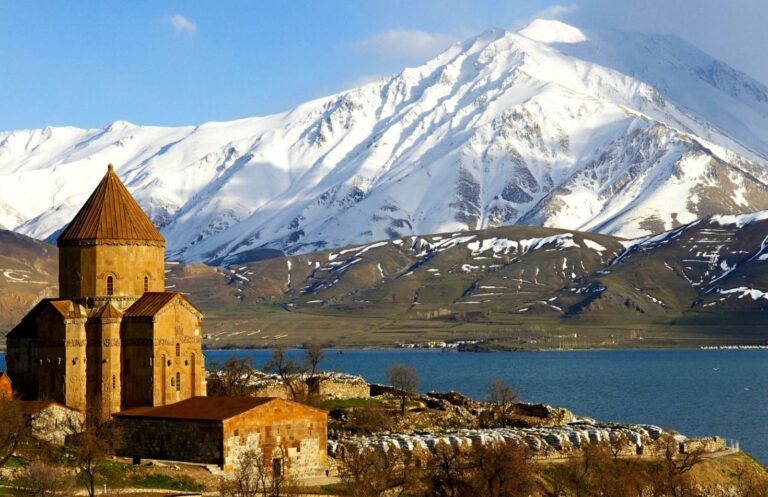
Van Lake – Placid and solemn, spread out bet ween the mountains, more a sea than a lake, the clouds just brush it` surface. These waters are witness to time eternal, a millennial observer of the region and it` history…

Many tourists

“”So many tourists used to come here that the hotels couldnt  accommodate them all. Beds would be set up in lobbies, homes would be turned into guest houses, and some hotel staff would even invite guests to stay at their own homes”” Every citizen of Van, over the age of 35, starts their recolection of the “”Glorious Paste”” with these words. Not so long ago, only 20 years, as many as 150,000 tourists visited the area every year, and tales of this fairy tale period are passed on to new generations.

Van Lake – Then, capsized by terrorism, life in Van and the surrounding region was pushed into a dark-age. For years Van became the silent heart of an “”off limits”” area for domestic and foreign tourists. Now, many years later, the lake and region have become safe once again, and tourists; (today` 20-somethings who have listened to the traveller` tales of their elders) have begun to appear again.

But, even though the 15 000 tourists who visited this year are a drop in the ocean when compared to years past, they brought great hope to the region. There is joy that tourists are once again wandering the city` streets; filling the hotels and visiting the shops and ruins. Happily, many Turks are included in the swell of tourists. With sights to make postcards lacklustre and enough historical sites to exhaust historians, the Van region deserves even more interest. Let` wish the province a speedy return to the status it deserves and move on to reflect on the bright blue waters of Lake Van and it` surrounding countryside.

Evening at Van Castle…

Van, known in ancient times as “”Tuspa ”, has a history stretching back some 7 000 years; beginning with the Hurri and then Urartu peoples. Developed great civilisations which left countless gifts of history. Without doubt the most magnificent of these is Tuspa or Van Castle built in 855 BC by order of the Urartu King Sardon I. It holds the first written Urartian document; engraved in Assyrian, on the Madir Bulwark and describing the construction of the fortress. Built of limestone rock and covering 1,800 metres, the castle was restored during the Ottoman period.

Another of the Urartian wonders are the still operable water channels, known as Samran. Known to be Urartu` administrative and entertainment centre, (iavu§tepe (Sardonihinli) is located 24 kilometres outside the city. If you visit the site, we re-commend that you meet Mehmet Kusman, custodian for 38 years, at 63 years old and with only a middle school education, Kusman can read and write cuneiform as if it was his mother tongue. Also, don £ pass up the chance of a guided tour, enriched with interesting tales, from one of Kusman` sons, Ensara (20) or Ersin (17).

Rising above the Hosap River, the Hosap Castle is known to be an Urartian, bit was given a new form by the Ottomans in the 17th century. The castle takes your breath away with its cylindrical shape and bird`-eye view. The Seven Churches. Old Van` Husrev Pasa, Kaya Ceiebi, the Mosques of Suleyman Khan, the Van Muse-um, mausoleums, caravanserais and bridges built by the Urartians, the Seljuks and the Ottomans, pile historical sites, each more splendid than the other, on top of each other.

A sea and 400 kilometres of coastline…

With a surface area of 3 765 square kilometres, a width of 125 kilometres, a length of 60 kilometres and a coastline of 400 ki-lometres, Lake Van really deserves to be called a `ea rather than a lake. Lake Van` islands, coastline and spotless beaches remind you of the sea. A modern highway skirts the edges of the lake from Van in the east, to Bitiis in the west, and takes you through beautiful coastal countryside. The Lake` two largest islands, Akdamar and (Jarpanak, with their natural beauty and churches, are popular with visitors. To the south-west of Van. past the coastal hotels and motels in Edremit, you arrive in Geras County.

From here you can board a motorboat to Akdamar and enjoy yourself on the trip. The intricate stone carvings of Akdamar Church, on Akdamar Island, dazzle the eye. Dating from the 1 Oth century, it is a place of pilgrimage for Armenians. The Armenian church on Carpanak Island dates from the 9th century, and the island` charm is added to by the large migration of birds during the Summer. At this time, it becomes a bird watcher` paradise.

Make sure not to miss the historical Seljuk graves around the Halime Hatun Dome in Gevas (if Seljuk graves are of special in-terest, you should visit the spectacular grave at Ahlat). During the Summer, you can swim, sunbathe or have a picnic on Edremit and Gevas` beautiful beaches.

The road through Gevas occasionally weaves between the mountains, and you pass into the province of Bitlis. One of the most important counties of Bitlis, Tatvan, is sure to be a favorite for tourists, and if you wish to enjoy a trip on the water, just jump onto one of the ferries for a pleasant six hour trip across the lake from Tatvan to Van.

Read More about Tips From The Artists