Home Blog Page 16

The Long Exile part 6

0

Then he saw his children, quite little, as they were at that time: one with a little cloak on, another at his mother` breast. And then he remembered himself as he used to be young and merry. He remembered how he sat playing the guitar in the porch of the inn where he was arrested, and how free from care he had been. He saw, in his mind, the place where he was flogged, the executioner, and the people standing mound; the chains, the convicts, all the twenty-six years of his prison life, and .his premature old age. The thought of it all made him so wretched that he was ready to kill himself.

“And it` all that villain` doing!” thought Aksionov. And his anger was so great against Makar Semyonich that he longed for vengeance, even if he himself should perish for it. He kept repeating prayers all night, but could get no peace. During the day he did not go near Makar Semyonich, nor even look at him.

A fortnight passed in this way. Aksionov could not sleep at night, and was so miserable that he did not know what to do.

Prisoners slept

One night as he was walking about the prison he noticed some earth that came rolling out from under one of the shelves on which the prisoners slept. He stopped to see what it was. Suddenky Malar Semyonich crept out from under the shelf, and looked up at Aksionov with frightened face. Aksionov tried to pass without looking at him, but Makar seized his hand and told him that he had dug a hole under the wall, getting rid of the earth by putting it into his high-boots, and emptying it out every day on the road when the prisoners were driven to their work.

“Just you keep quiet, old man, and you shall get out too. If you blab, theyll flog the life out of me, but I will kill you first.”

Aksionov trembled with anger as he looked at his enemy. He drew his hand away, saying, “I have no wish to escape, and you have no need to kill me; you killed me long ago! As to telling of you I may do so or not, as God shall direct.”

Next day, when the convicts were led out to work, the convoy soldiers noticed that one or other of the prisoners emptied some earth out of his boots. The prison was searched and the tunnel found. The Governor came and questioned all the prisoners to find out who had dug the hole. They all denied any knowledge of it.

Read More about Isaac Comnenus 40

The Long Exile part 5

0

“Where are you from?” asked some one.

“From Vladimir. My family are of that town. My name is Makar, and they also call me Semyonich.”

Aksionov raised his head and said: “Tell me, Semyonich, do you know anything of the merchants Aksionov of Vladimir? Are they still alive?”
“Know them? Of course I do. The Aksionovs are rich, though their father is in Siberia: a sinner like ourselves, it seems! As for you, Gran- dad, how did you come here?”

Aksionov did not like to speak of his misfortune. He only sighed, and said, “For my sins I have been in prison these twenty-six years.” “What sins?” asked Makar Semyonich.

But Aksionov only said, “Well, well I must have deserved it!” He would have said no more, but his companions told the newcomers how Aksionov came to be in Siberia; how some one had killed a merchant, and had put the knife among Aksionov` things, and Aksionov had been unjustly condemned.

Makar Semyonich

When Makar Semyonich heard this, he looked at Aksionov, slapped his own knee, and exclaimed, “Well, this is wonderful! Really wonderful! But how old youve grown, Grandad!”

The others asked him why he was so surprised, and where he had seen Aksionov before; but Makar Semyonich did not reply. He only said: “It` wonderful that we should meet here, lads!”

These words made Aksionov wonder whether this man knew who had killed the merchant; so he said, “Perhaps, Semyonich, you have heard of that affair, or maybe youve seen me before?”

“How could I help hearing? The world` full of rumors. But it` a long time ago, and Ive forgotten what I heard.”

“Perhaps you heard who killed the merchant?” asked Aksionov. Makar Semyonich laughed, and replied: “It must have been him in whose bag the knife was found! If some one else hid the knife there, ‘He` not a thief till he` caught, as the saying is. How could any one put a knife into your bag while it was under your head? It would surely have woke you up.”
When Aksionov heard these words, he felt sure this was the man who hud killed the merchant. He rose and went away. All that night Aksionov lay awake. He felt terribly unhappy, and all sorts of images rose in his mind. There was the image of his wife as she was when he parted from her to go to the fair. He saw her as if she were present; her face and her eyes rose before him; he heard her speak and laugh.

Read More about Isaac Comnenus 11

The Long Exile part 4

0

And Aksionov wrote no more petitions; gave up all hope, and only prayed to God.

Aksionov was condemned to be flogged and sent to the mines. So he was flogged with a knout, and when the wounds made by the knout were healed, he was driven to Siberia with other convicts.

For twenty-six years Aksionov lived as a convict in Siberia. His hair turned white as snow, and his beard grew long, thin, and gray. All his mirth went; he stooped; he walked slowly, spoke little, and never laughed, but he often prayed.

Enough prison

In prison Aksionov learned to make boots, and earned a little money, with which he bought The Lives of the Saints. He read this book when there was light enough in the prison; and on Sundays in the prison- church he read the lessons and sang in the choir; for his voice was still good.

The prison authorities liked Aksionov for his meekness, and his fellow-prisoners respected him: they called him “Grandfather,” and “The Saint.” When they wanted to petition the prison authorities about anything, they always made Aksionov their spokesman, and when there were quarrels among the prisoners they came to him to put things right, and to judge the matter.

No news reached Aksionov from his home, and he did not even know if his wife and children were still alive.
One day a fresh gang of convicts came to the prison. In the evening the old prisoners collected round the new ones and asked them what towns or villages they came from, and what they were sentenced for. Among the rest Aksionov sat down near the newcomers, and listened with downcast air to what was said.

One of the new convicts, a tall, strong man of sixty, with a closely- cropped gray beard, was telling the others what he had been arrested for.

“Well, friends,” he said, “I only took a horse that was tied to a sledge, and I was arrested and accused of stealing. I said I had only taken it to get home quicker, and had then let it go; besides, the driver was a personal friend of mine.

So I said, It` all right. No, said they, you stole it. But how or where I stole it they could not say. I once really did something wrong, and ought by rights to have come here long ago, but that time I was not found out. Now I have been sent here for nothing at all. … Eh, but it` lies Im telling you; Ive been to Siberia before, but I did not stay long.”

Read More about The First Crusade part 15

The Long Exile part 3

0

The police-officer ordered the soldiers to bind Aksionov and to put him in the cart. As they tied his feet together and flung him into the cart, Aksionov crossed himself and wept. His money and goods were taken from him, and he was sent to the nearest town and imprisoned there. Inquiries as to his character were made in Vladimir. The merchants and other inhabitants of that town said that in former days he used to drink and waste his time, but that he was a good man. Then the trial came on: he was charged with murdering a merchant from Ryazan, and robbing him of twenty thousand rubles.

His wife was in despair, and did not know what to believe. Her children were all quite small; one was a baby at her breast. Taking them all with her, she went to the town where her husband was in jail. At first she was not allowed to see him; but after much begging, she obtained permission from the officials, and was taken to him.

When he saw her husband in prison-dress and in chains, shut up with thieves and criminals, she fell down, and did not come to her senses for a long time. Then she drew her children to her, and sat down near him. She told him of things at home, and asked about what had happened to him. He told her all, and she asked, “What can we do now?”

“We must petition the Czar not to let an innocent man perish.”

His wife told him that she had sent a petition to the Czar, but it had not: been accepted.

Aksionov did not reply, but only looked downcast.

Remember

Then his wife said, “It was not for nothing I dreamt your hair had turned gray. You remember? You should not have started that day.” And passing her fingers through his hair, she said: “Vanya dearest, tell your wife the truth; was it not you who did it?”

“So you, too, suspect me!” said Aksionov, and, hiding his face in his hands, he began to weep. Then a soldier came to Say that the wife and children must go away; and Aksionov said good-bye to his family for the last time.

When they were gone, Aksionov recalled what had been said, and When he remembered that his wife also had suspected him, he said to himself, “It seems that only God can know the truth; it is to Him alone WC must appeal, and from Him alone expect mercy.”

Read More about The Long Exile part 6

The Long Exile part 2

0

When he had gone about twenty-five miles, he stopped for the horses to be fed. AJcsionov rested awhile in the passage of the inn, then he stepped out into the porch, and, ordering a samovar to be heated, got out his guitar and began to play.

Fellow Merchant

Suddenly a troika drove up with tinkling bells and an official alighted, followed by two soldiers. He came to Aksionov and began to question him asking him who he was and whence he came. Aksionov answered him, fully, and said, “Wont you have some tea with me?” But the official went on cross-questioning him and asking him, “Where did you spend last night? Were you alone, or with a fellow-merchant? Did you see the other merchant this morning? Why did you leave the inn before dawn?”

Aksionov wondered why he was asked all these questions, but he described all that had happened, and then added, “Why do you crossquestion me as if I were a thief or a robber? I am traveling on business of my own, and there is no need to question me.”

Then the official, calling the soldiers, said, “I am the police-officer of this district, and I question you because the merchant with whom you spent last night has been found with his throat cut. We must search your things.”

They entered the house. The soldiers and the police-officer unstrapped Aksionov` luggage and searched it. Suddenly the officer drew a knife out of a bag, crying, “Whose knife is this?”

Aksionov looked, and seeing a blood-stained knife taken from his bag, he was frightened.

“How is it there is blood on this knife?”

Aksionov tried to answer, but could hardly utter a word, and only stammered: “I dont know not mine.”

Then the police-officer said: “This morning the merchant was found in bed with his throat cut. You are the only person who could have done it. The house was locked from inside, and no one else was there. Here is this blood-stained knife in your bag, and your face and manner betray you! Tell me how you killed him, and how much money you stole?”

Aksionov swore he had not done it; that he had not seen the merchant after they had had tea together; that he had no money except eight thousand rubles of his own, and that the knife was not his. But his voice was broken, his face pale, and he trembled with fear as though he were guilty.

Read More about Coastal Bulgaria holidays

The Long Exile part 1

0

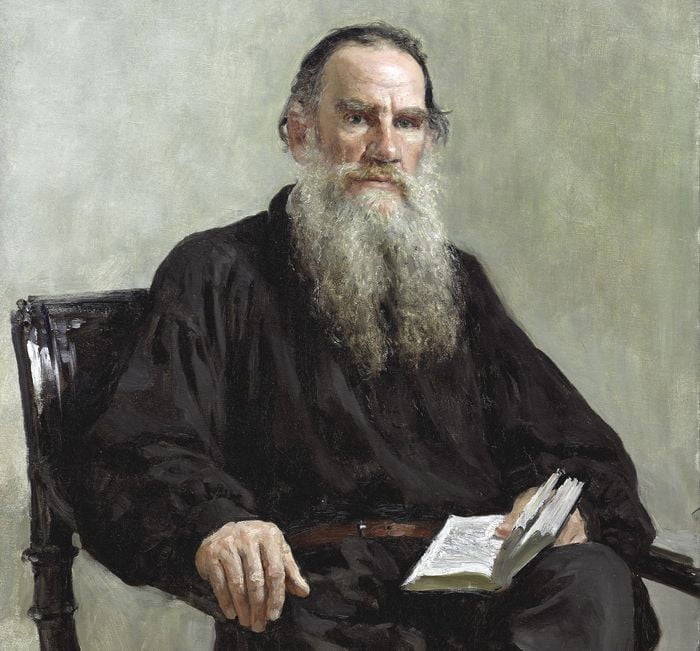
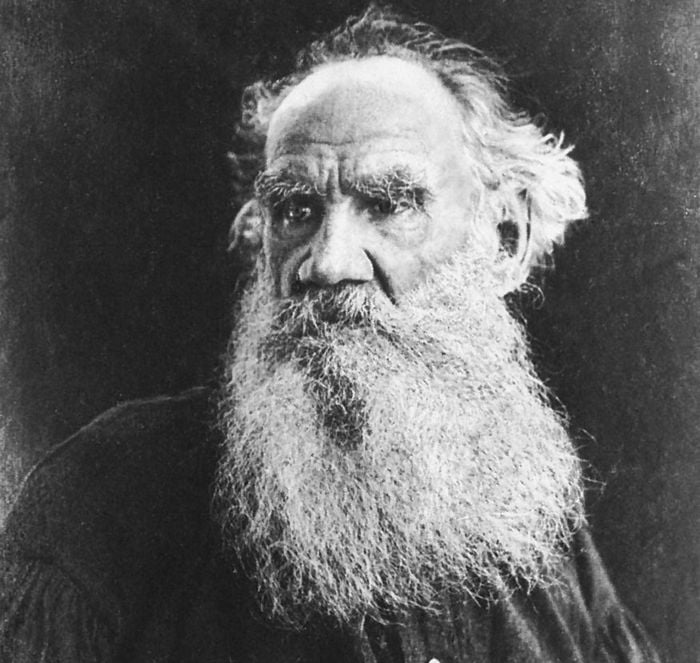
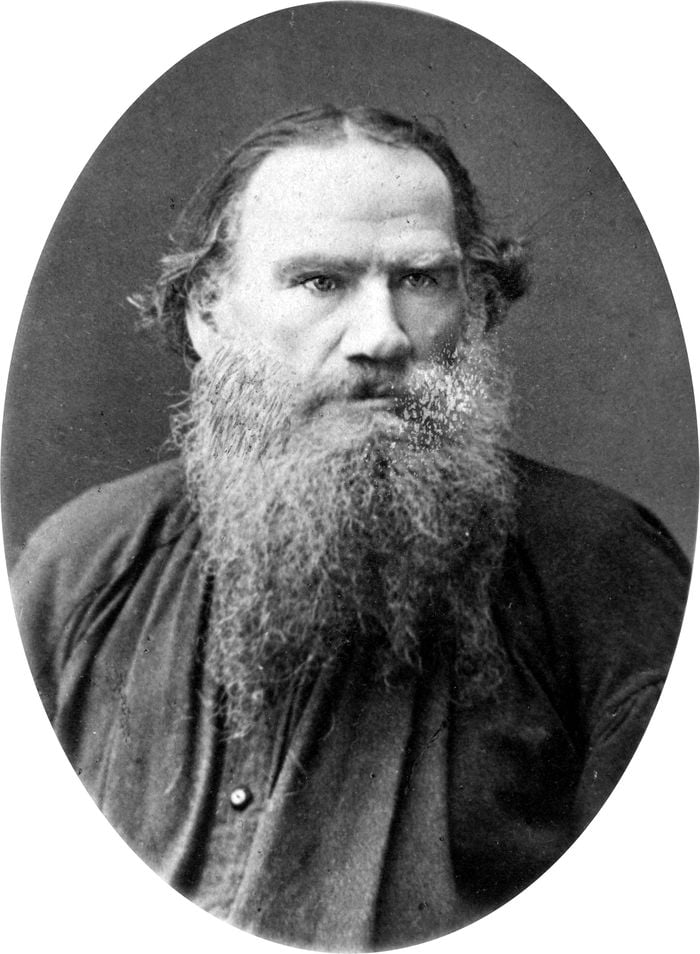
Leo Tolstoy (1828 1910)

Tolstoy is the most celebrated of all Russian writers. This extraordinary man, after serving in the army and leading a wild and reckless life, was for half a century the great interpreter of the life of his country, and during the last thirty years a religious and social prophet. He was preeminent as a novelist, though his complete works include a large number of fairy tales and short stories.

The present version, by Louise and Aylmer Maude, is reprinted by permission of the translators and publisher, from Twenty-Three Tales by Leo Tolstoy, published by Humphrey Milford, Oxford University Press in the World` Classics Series. The title in the original runs God Sees the Truth, but Waits.

The Long Exile

In the town of Vladimir lived a young merchant named Ivan Dmit- rich Aksionov. He had two shops and a house of his own.

Aksionov was a handsome, fair-haired, curly-headed fellow, full of fun, and very fond of singing. When quite a young man he had been given to drink, and was riotous when he had had too much; but after lie married he gave up drinking, except now and then.

One summer Aksionov was going to the Nizhny Fair, and as he bade good-bye to his family, his wife said to him, “Ivan Dmitrich, do not Mart to-day; I have had a bad dream about you.”

Aksionov laughed, and said, “You are afraid that when I get to the fair I shall go on a spree.”

His wife replied: “I do not know what I am afraid of; all I know is that I had a bad dream. I dreamt you returned from the town, and when you took off your cap I saw that your hair was quite gray.”

Aksionov laughed. “That` a lucky sign,” said he. “See if I dont sell out all my goods, and bring you some presents from the fair.”

So he said good-bye to his family, and drove away.

When he had traveled half-way, he met a merchant whom he knew, and they put up at the same inn for the night. They had some tea together, and then went to bed in adjoining rooms.

It was not Aksionov` habit to sleep late, and wishing to travel while it was still cool, he aroused his driver before dawn, and told him to put in the horses.

Then he made his way across to the landlord of the inn (who lived in a cottage at the back), paid his bill, and continued his journey.

Read More about The Shipwreck of Simonides 1

The Specter Bridegroom part 13

0

How long the good old lady would have observed this promise is uncertain, for she dearly loved to talk of the marvelous, and there is a triumph in being the first to tell a frightful story; it is, however, still quoted in the neighborhood, as a memorable instance of female secrecy, that she kept it to herself for a whole week; when she was suddenly absolved from all further restraint by intelligence brought to the breakfast-table one morning that the young lady was not to be found. Her room was empty the bed had not been slept in—the window was open and the bird had flown!

The astonishment and concern with which the intelligence was received can only be imagined by those who have witnessed the agitation which the mishaps of a great man cause among his friends. Even the poor relations paused for a moment from the indefatigable labors of the trencher; when the aunt, who had at first been struck speechless, wrung her hands and shrieked out, “The goblin! the goblin! She` carried away by the goblin!”

In a few words she related the fearful scene of the garden, and concluded that the specter must have carried off his bride. Two of the domestics corroborated the opinion, for they had heard the clattering of a horse` hoofs down the mountain about midnight, and had no doubt that it was the specter on his black charger, bearing her away to the tomb. All present were struck with the direful probability; for events of the kind are extremely common in Germany, as many well- authenticated histories bear witness.

What a lamentable situation was that of the poor Baron! What a heartrending dilemma for a fond father, and a member of the great family of Katzenellenbogen! His only daughter had either been rapt away to the grave, or he was to have some wood-demon for a son-in- law, and, perchance, a troop of goblin grandchildren. As usual, he was completely bewildered, and all the castle in an uproar. The men were ordered to take horse and scour every road and path and glen of the Odenwald. The Baron himself had just drawn on his jack-boots, girded on his sword, and was about to mount his steed to sally forth on the doubtful quest, when he was brought to a pause by a new apparition.

A lady was seen approaching the castle, mounted on a palfrey attended by a cavalier on horseback. She galloped up to the gate, sprang from her horse, and falling at the Baron` feet, embraced his knees. It was his lost daughter, and her companion the Specter Bridegroom! The Baron was astounded. He looked at his daughter, then at the specter, and almost doubted the evidence of his senses. The latter, too, was wonderfully improved in his appearance, since his visit to the world of spirits. His dress was splendid, and set off a noble figure of manly symmetry. He was no longer pale and melancholy. His fine countenance was flushed with the glow of youth, and joy rioted in his large dark eyes.

The mystery was soon cleared up. The cavalier (for, in truth, as you must have known all the while, he was no goblin) announced himself as Sir Herman Von Starkenfaust. He related his adventure with the young Count. He told how he had hastened to the castle to deliver the unwelcome tidings, but that the eloquence of the Baron had interrupted him in every attempt to tell his tale. How the sight of the bride had completely captivated him, and that to pass a few hours near her he had tacitly suffered the mistake to continue. How he had been sorely perplexed in what way to make a decent retreat, until the Baron` goblin stories had suggested his eccentric exit. How, fearing the feudal hostility of the family, he had repeated his visits by stealth had haunted the garden beneath the young lady` window had wooed had won had borne away in triumph and, in a word, had wedded, the fair.

Other circumstances

Under any other circumstances the Baron would have been inflexible, for he was tenacious of paternal authority and devoutly obstinate in ail family feuds; but he loved his daughter; he had lamented her as lost; he rejoiced to find her still alive; and, though her husband was of a hostile house, yet, thank Heaven, he was not a goblin. There was something, it must be acknowledged, that did not exactly accord with his notions of strict veracity, in the joke the knight had passed upon him of his being a dead man; but several old friends present, who had served in the wars, assured him that every stratagem was excusable in love, and that the cavalier was entitled to especial privilege, having lately served as a trooper.

Matters therefore, were happily arranged. The Baron pardoned the young people on the spot. The revels at the castle were resumed. The poor relations overwhelmed this new member of the family with loving kindness ; he was so gallant, so generous and so rich. The aunts, it is true, were somewhat scandalized that their system of strict seclusion and passive obedience should be so badly exemplified, but attributed all to their negligence in not having the windows grated. One of them was particularly mortified at having her marvelous story marred, and that the only specter she had ever seen should turn out a counterfeit; but the niece seemed perfectly happy at having found him substantial flesh and blood and so the story ends.

Read More about Baba Vanga
The Specter Bridegroom part 12

0

But, whatever may have been the doubts entertained, they were completely put to an end by the arrival, next day, of regular missives confirming the intelligence of the young Count` murder, and his interment in Wurtzburg cathedral.

The dismay at the castle may well be imagined. The Baron shut himself up in his chamber. The guests who had come to rejoice with him could not think of abandoning him in his distress. They wandered about the courts, or collected in groups in the hall, shaking their heads and shrugging their shoulders at the troubles of so good a man; and sat longer than ever at table, and ate and drank more stoutly than ever, by way of keeping up their spirits. But the situation of the widowed bride was the most pitiable. To have lost a husband before she had even embraced him—and such a husband! If the very specter could be so gracious and noble, what must have been the living man? She filled the house with lamentations.

Widowhood

On the night of the second day of her widowhood, she had retired to her chamber, accompanied by one of her aunts, who insisted on sleeping with her. The aunt, who was one of the best tellers of ghost stories in all Germany, had just been recounting one of her longest, and had fallen asleep in the very midst of it. The chamber was remote, and overlooked a small garden. The niece lay pensively gazing at the beams of the rising moon, as they trembled on the leaves of an aspen tree before the lattice.

The castle clock had just told midnight, when a soft strain of music stole up from the garden. She rose hastily from her bed and stepped lightly to the window. A tall figure stood among the shadows of the trees. As it raised its head, a beam of moonlight fell upon the countenance. Heaven and earth! She beheld the Specter Bridegroom! A loud shriek at that moment burst upon her ear, and her aunt, who had been awakened by the music, and had followed her silently to the window, fell into her arms. When she looked again, the specter had disappeared.

Of the two females, the aunt now required the most soothing, for she was perfectly beside herself with terror. As to the young lady, there was something, even in the specter of her lover, that seemed endearing. There was still the semblance of manly beauty; and though the shadow of a man is but little calculated to satisfy the affections of a lovesick girl, yet, where the substance is not to be had, even that is consoling.

The aunt declared that she would never sleep in that chamber again; the niece, for once, was refractory, and declared as strongly that she would sleep in no other in the castle: the consequence was that she had to sleep in it alone; but she drew a promise from her aunt not to relate the story of the specter, lest she should be denied the only melancholy pleasure left her on earth—that of inhabiting the chamber over which the guardian shade of her lover kept its nightly vigils.

Read More about The First Crusade part 2

The Specter Bridegroom part 11

0

“What! going to leave the castle at midnight? Why, everything was prepared for his reception; a chamber was ready for him if he wished to retire.”

The stranger shook his head mournfully and mysteriously: “I must lay my head in a different chamber to-night!”

There was something in this reply, and the tone in which it was uttered, that made the Baron` heart misgive him; but he rallied his forces, and repeated his hospitable entreaties. The stranger shook his head silently, but positively, at every offer; and, waving his farewell to the company, stalked slowly out of the hall. The maiden aunts were absolutely petrified—the bride hung her head, and a tear stole to her eye.

Followed the stranger

The Baron followed the stranger to the great court of the castle, where the black charger stood pawing the earth and snorting with impatience. When they had reached the portal, whose deep archway was dimly lighted by a cresset, the stranger paused, and addressed the Baron in a hollow tone of voice, which the vaulted roof rendered still more sepulchral. “Now that we are alone,” said he, “I will impart to you the reason of my going. I have a solemn, an indispensable engagement”

“Why,” said the Baron, “cannot you send some one in your place?”
“It admits of no substitute—I must attend it in person—I must away to Wurtzburg cathedral—”

“Ay,” said the Baron, plucking up spirit, “but not until to-morrow —to-morrow you shall take your bride there.”

“No! no!” replied the stranger, with tenfold solemnity, “my engagement is with no bride the worms! the worms expect me! I am a dead man I have been slain by robbers my body lies at Wurtzburg at midnight I am to be buried the grave is waiting for me I must keep my appointment!”
He sprang on his black charger, dashed over the drawbridge, and the clattering of his horse` hoofs was lost in the whistling of the night blast.

The Baron returned to the hall in the utmost consternation, and related what had passed. Two ladies fainted outright; others sickened at the idea of having banqueted with a specter. It was the opinion of some that this might be the wild huntsman famous in German legend. Some talked of mountain sprites, of wood-demons, and of other supernatural beings, with which the good people of Germany have been so grievously harassed since time immemorial.

One of the poor relations ventured to suggest that it might be some sportive evasion of the young cavalier, and that the very gloominess of the caprice seemed to accord with so melancholy a personage. This, however, drew on him the indignation of the whole company, and especially of the Baron, who looked upon him as little better than an infidel; so that he was fain to abjure his heresy as speedily as possible, and come into the faith of the true believers.

Read More about Isaac Comnenus 9

The Specter Bridegroom part 10

0

The feast went on merrily, or at least noisily, for the guests were all blessed with those keen appetites that attend upon light purses and mountain air. The Baron told his best and longest stories, and never held he told them so well, or with such great effect. If there was anything marvelous, his auditors were lost in astonishment; and if anything mg facetious, they were sure to laugh exactly in the right place.

The Huron, it is true, like most great men, was too dignified to utter any join- but a dull one: it was always enforced, however, by a bumper of client Hochheimer; and even a dull joke, at one` own table, unveil up with jolly old wine, is irresistible. Many good things were mild by poorer and keener wits that would not bear repeating, except mi similar occasions; many sly speeches whispered in ladie` ears that impose convulsed them with suppressed laughter; and a song or two rim red out by a poor, but merry and broad faced cousin of the Baron, I hid absolutely made the maiden aunts hold up their fans.

Amid all this revelry, the stranger-guest maintained a most singular and unseasonable gravity. His countenance assumed a deeper cast of dejection as the evening advanced, and, strange as it may appear, even the Baron` jokes seemed only to render him the more melancholy. At times he was lost in thought, and at times there was a perturbed and restless wandering of the eye that bespoke a mind but ill at ease. His conversation with the bride became more and more earnest and mysterious. Lowering clouds began to steal over the fair serenity of her brow, and tremors to run through her tender frame.

Company

All this could not escape the notice of the company. Their gaiety was chilled by the unaccountable gloom of the bridegroom; their spirits were infected; whispers and glances were interchanged, accompanied by shrugs and dubious shakes of the head. The song and the laugh grew less and less frequent: there were dreary pauses in the conversation, which were at length succeeded by wild tales and supernatural legends. One dismal story produced another still more dismal, and the Baron nearly frightened some of the ladies into hysterics with the history of the goblin horseman that carried away the fair Leonora—a dreadful, but true story, which has since been put into excellent verse, and is read and believed by all the world.

The bridegroom listened to this tale with profound attention. He kept his eyes steadily fixed on the Baron, and, as the story drew to a close, began gradually to rise from his seat, growing taller and taller, until, in the Baron` entranced eye, he seemed almost to tower into a giant. The moment the tale was finished, he heaved a deep sigh, and took a solemn farewell of the company. They were all amazement. The Baron was perfectly thunderstruck.

Read More about The First Crusade part 26