Home Blog Page 2

Arrival at Momjler (Toli)

0

After leaving the hills behind us, we traveled through a wide and open plain country until we reached Momjler, also called Toli. This was a large and important town, well populated and pleasantly situated among fertile lands. The air was fresh, and the surrounding fields made the place appear lively and welcoming.

At that time, this town had been specially prepared for an important event. The Sultana, who was staying at Larissa and was near the time of childbirth, had been chosen to come here to be delivered and to rest afterward. Every necessary comfort and arrangement had already been made for her arrival. Later, I heard that she gave birth to a daughter, but sadly the child did not live long Ephesus Guided Tours.

The Turks held Alexander the Great in very high regard, especially because he was born in Macedonia. For this reason, many of them would have been pleased if a son of the Empire had been born in this land, believing it would have been a sign of good fortune and strength for the state.

Springs, Hills, and Distant Views

From Momjler, we traveled on to Filurina and then to Ecclisso Verbeni, places known for their clear and abundant springs. The water here was fresh, plentiful, and well respected by the local people. These springs provided life and comfort to the surrounding villages and fields.

Before we descended the hill that leads down toward this town, we were rewarded with a fine view. Straight ahead, at a distance of about seventy miles, we could clearly see the famous Mount Olympus, rising proudly above the land. To our left, we observed the Lakes of Petriski and Ostrova, calm and shining in the light The Mountains Between Serbia and Macedonia.

There is a local tradition connected with these lakes. The people say that one of them was formed when large stones were removed from the sides of the hills, opening underground passages. Through these openings, hidden waters found their way to the surface and flooded the nearby plains, creating the lake. Whether this story is true or not, it shows how closely the people observe and explain the natural world around them.

From the Plains to the Rocky Hills

Afterward, we came to Peribugla, where we once again left the open plains behind us. From there, our journey led us across high and rocky hills, rough and tiring to travel through. The paths were narrow, and the land was broken and uneven, reminding us how quickly the character of the country can change.

Continuing onward, we reached Sanggiple, and from there we crossed the River Injecora, whose waters were steady and cool. The crossing slowed our journey but offered a refreshing pause.

The Town of Sarvitza

At last, we arrived at Sarvitza, a well-known and notable town. It is built partly upon a hill and partly upon the plain below, giving it both strength and convenience. The Christian population mostly lives in the upper part of the town, closer to the hills, while the Turks dwell in the lower area near the plain.

Not far from Sarvitza stands a castle built upon a very high rock. Its position makes it strong and commanding, watching over the surrounding country and the roads that pass through it. We traveled through a narrow passage near this place, feeling the weight of history and defense that such locations always carry.
The Mountains Between Serbia and Macedonia

0

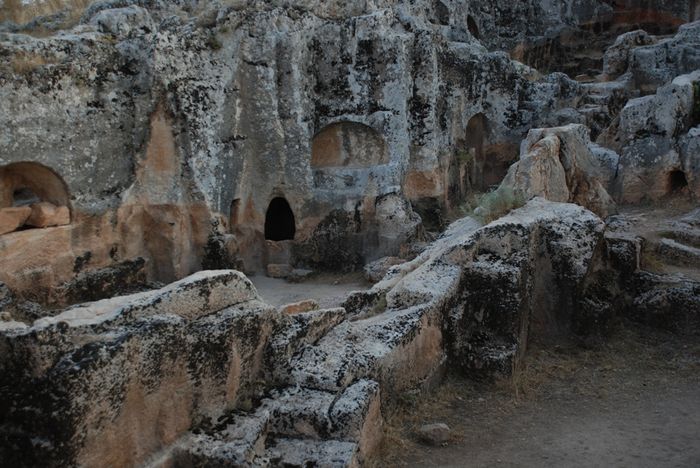
The hills that lie between Serbia and Macedonia are part of Mount Haemus, a great mountain range known by several names. Many writers believe that this range stretches from the Adriatic Sea in the west to the Black Sea (formerly called the Buxine Sea) in the east. Because of its size and height, Mount Haemus has long acted as a natural barrier between regions and nations A Natural Gate Through the Rocks.

There are several mountain passes through these hills, but in ancient times they were closely guarded. Philip, King of Macedon, took special care to block these passages to protect his kingdom from neighboring peoples. After securing the passes, he believed himself safe from attack, thinking that no enemy could reach him unless they fell from the clouds. This shows how confident he was in the natural strength of the mountains.

Can Two Seas Be Seen From One Peak?

Some people have claimed that from the highest peaks of Mount Haemus, a man might be able to see both the Adriatic Sea and the Black Sea at the same time. It is said that King Philip himself attempted to test this idea. However, there is no record that he succeeded, nor do I believe that anyone has truly done so.

While traveling on these high mountains and standing on slopes that incline toward the Adriatic Sea, I looked carefully in all directions. Yet my view was limited, because the high Albanian hills cut off any long and distant prospect. The land rises and falls in such a way that the sight is broken long before it can reach the sea.

Journey from Urania to Comonava

From Urania, we continued our journey to Comonava, near which there still stands a Greek monastery, built upon the side of the hills. Though not large, it appeared old and peaceful, showing signs of long religious use. From there, we traveled onward to Kaplanlih, also called Tigres Town. I could not learn why it bore this name, nor did anyone we met offer a clear explanation Ephesus Sightseeing Tour.

Kuprulih and the Great Fire

Next, we came to Kuprulih, which means Bridge Town. Here flows a considerable river called the Pjinia, crossed by a strong and well-built bridge. While we were staying in this town, a great fire broke out by accident. The flames spread rapidly, and a large part of the town was burned before we could leave. The fire grew stronger with the wind, creating fear and confusion among the people.

In Kuprulih, we met many persons who were traveling with tribute and gifts, including hawks from Wallachia, intended for the Grand Signior, who was then residing at Larissa.

Through the Mountains to Fyrlipe

From Kuprulih, passing by Isbar, we traveled onward to Fyrlipe. On the way, we crossed the high mountains of Fyrlipe in Macedonia, which shine like silver, much like those of Cliffura. These mountains contain muscovy glass and may also hide valuable minerals within their depths.

The rocks here are the most rough and broken that I have ever seen. Huge stones lie piled upon one another with no soil between them, forming a wild and fearful landscape. Upon a high ridge, rising many steeples in height, stands the strong Castle of Marco Kraljević, a man once famous throughout these lands. The castle’s position shows great strength, and it commands the surrounding country with authority.

Patriarch Evtimi and the Late Medieval Period

0

One of the most important cultural figures of medieval Bulgaria was Patriarch Evtimi of Tarnovo. He lived during the final years of the Second Bulgarian Kingdom and played a key role in preserving Bulgarian culture and language. Patriarch Evtimi founded a literary school in Tarnovo, which became an important center for the spread of Bulgarian literature and education.

He was a highly respected writer and scholar. Patriarch Evtimi wrote many biographies of saints and martyrs, which were widely read and copied. His most famous work is the Life of St. John of Rila, one of the most important Bulgarian saints. Through his writings, Evtimi helped protect the purity of the Bulgarian language and strengthen spiritual life at a time of great political danger The Beginnings of Bulgarian Culture and Language.

Under the Turkish Rule

In 1396, Bulgaria fell under Ottoman Turkish rule. This event marked the beginning of a very dark period for Bulgarian national culture. Almost all forms of organized cultural life stopped. Books were no longer written or translated into Bulgarian, and many existing manuscripts were destroyed. Writers, scholars, and church leaders were often killed or forced into silence.

As a result, Bulgarian literature could no longer develop freely within the country. Cultural activity was pushed into exile or hidden in monasteries. Despite these harsh conditions, Bulgarian culture did not disappear completely City Tour Istanbul.

Bulgarian Literature in Exile

Many Bulgarian writers escaped to other Slavic lands, where they continued to write in Bulgarian and preserve the national tradition. One of the most important writers in exile was Grigori Tsamblak. In 1414, he was elected Metropolitan of Kiev. He died around 1450, after writing more than fifty theological works, all in the Bulgarian language.

Thanks to his influence, Bulgarian remained an official church language north of the Danube, in regions that are now part of Romania. This helped keep the Bulgarian literary tradition alive far beyond the borders of Bulgaria.

Another important writer in exile was Konstantin Kostenechki. He settled in Serbia, where he founded a literary school. Konstantin prepared a Bulgarian grammar that emphasized a phonetic approach to the alphabet. His work was important for the later development of the modern Bulgarian language.

The Double Yoke and Threat to National Identity

From 1396 to 1878, Bulgaria lived under a double yoke. The first was political domination by the Ottoman Turks. The second was spiritual domination by the Greek clergy, who controlled the Bulgarian church and education. Together, these pressures seriously threatened the survival of Bulgarian national identity.

For many years, Bulgarians were at risk of losing their language, history, and cultural memory. However, a turning point came in the eighteenth century.

Father Paisi and the National Awakening

In 1762, a monk named Father Paisi of Hilandar Monastery on Mount Athos wrote Slavonic-Bulgarian History. This work became the foundation of the Bulgarian National Revival. In his book, Paisi expressed deep pride in Bulgaria’s past and reminded Bulgarians of their historical achievements.

His message awakened strong national feelings and encouraged Bulgarians to preserve their language and traditions. This book played a crucial role in preventing the assimilation of the Bulgarian people.

From the National Revival to Modern Literature

Father Paisi’s work was written by hand, as there was still no printing press in Bulgaria at that time. Even so, copies of his book spread widely. Bulgarian literature began to grow out of the national revival inspired by this single work.

In 1813, the poet Dimitar Popov wrote a famous ode dedicated to Sofronii of Vratsa, another leader of the national revival. In 1845, the first poem written in modern Bulgarian, Stoyan and Rada, was published by Nayden Gerov (1823–1867).

Other important writers and poets of this period include Georgi Rakovski (1821–1867), Petko Slaveikov (1828–1895), and Dobri Chintulov (1823–1886). The greatest Bulgarian poet of the nineteenth century was Hristo Botev (1848–1876). He combined poetry with revolutionary activity and died fighting for Bulgaria’s freedom.

The Beginnings of Bulgarian Culture and Language

0

In the year 893, the Bulgarians officially adopted the Slavic language as their state and church language. This language later became known as Old Bulgarian. With this decision, Bulgaria took an important step in shaping its cultural and national identity. At the same time, a rich written tradition began to develop. This early literature, today often called Old Slavonic, focused mainly on religious and church matters Private Tours Istanbul.

The creation of a written language allowed Bulgaria to strengthen its independence from Greek cultural influence. It also helped spread Christianity in a form that ordinary people could understand.

Creation of the Bulgarian Alphabet

The Old Bulgarian alphabet was created by two brothers, Cyril and Methodius, who came from the city of Salonica. They developed the first Slavic alphabet to translate religious texts into a language understandable to the Slavic peoples. This original alphabet was called Glagolitic.

Later, a modified form of this writing system became known as the Cyrillic alphabet, named in honor of Cyril. Both brothers were later canonized as saints by the Eastern Orthodox Church because of their great contribution to Christian education and culture The Fourth Five-Year Plan (1961–1965).

The Role of Their Disciples

The work of Cyril and Methodius was continued by their disciples, especially Kliment and Naum. Kliment founded an important literary school in Ohrid, while Naum established another major center in Preslav. These schools played a central role in the development of Bulgarian literature and education.

The Ohrid and Preslav schools became leading cultural centers. Kliment of Ohrid, who died in 916, wrote at least twenty-seven known works. At the Preslav school, many important books were translated from Greek into Bulgarian. These translations helped enrich the language and expand its vocabulary.

The Golden Age of Bulgarian Literature

This period of strong literary and cultural activity reached its peak during the reign of King Simeon I, who ruled from 865 to 927. His reign is often called the “Golden Age” of Bulgarian literature and culture. During this time, Bulgaria became one of the main cultural centers of the Slavic world.

Literature, education, and art all developed rapidly. The Bulgarian language gained prestige and stability as both a state and church language.

Early Secular Writing

The first important writer to move beyond purely religious themes was Chernorizets Khrabur. His work About the Letters defended the young Bulgarian literary tradition against criticism from Greek writers. In this text, he argued strongly for the value and legitimacy of the Bulgarian alphabet and language.

This work marked an important step toward the development of secular thought and national awareness.

Influence on Other Slavic Peoples

Because of Bulgaria’s early literary activity, the Bulgarian alphabet was later adopted by other Slavic peoples. These included the Serbs, Russians, Ukrainians, and others. Through this influence, Bulgarian culture played a key role in shaping the cultural development of Eastern Europe.

Under the Byzantine Rule

In 1018, Bulgaria fell under Byzantine rule. This event had a serious impact on Bulgarian culture and language. The Byzantine authorities reintroduced Greek as the main language for church and state affairs. As a result, the development of the Bulgarian language suffered a major setback.

This interruption slowed the growth of Bulgarian national culture. However, the language did not disappear. During the later period, known as the Second Bulgarian Kingdom (1187–1396), Bulgarian cultural life slowly revived.

Survival of Bulgarian Literature

Despite foreign domination, Bulgarian writers and monks continued to write and copy books in Bulgarian. One such work was Istoriki (History), which briefly described events from the time of Abraham up to the twelfth century.

These efforts helped preserve Bulgarian language and culture during difficult times. They also prepared the ground for later cultural revival and national awakening.

The Fourth Five-Year Plan (1961–1965)

0

The Fourth Five-Year Plan covered the years from 1961 to 1965. It was closely connected to the long-term General Perspective Plan, which set economic goals for the period from 1961 to 1980. The Fourth Plan did not stand alone. Instead, it served as the first step in a much broader strategy aimed at transforming Bulgaria’s economy and society over twenty years.

The government viewed this plan as essential for building the material base of communism. Economic planning during this period became even more centralized, and state control over production and labor continued to grow.

Goals of the Twenty-Year Perspective Plan

The General Perspective Plan for 1961–1980 outlined very ambitious goals. The main objective was to greatly increase industrial production. Special emphasis was placed on machine construction, chemical production, and electric power. The plan also aimed to expand steel production and other heavy industries that were considered vital for long-term growth Patriarch Evtimi and the Late Medieval Period.

Agriculture was another important focus. The state planned to raise the output of farm goods and improve stock breeding. At the same time, the plan promised to satisfy consumer needs, especially in food production and light industry. However, these promises were secondary to the priority given to heavy industry.

The planners believed that production growth between 1961 and 1980 had to be much faster than in other socialist countries. Only in this way, they argued, could Bulgaria reach a similar level of economic development by 1980.

Sacrifices Required from Workers and Peasants

This rapid growth strategy had serious social consequences. Instead of improving living conditions in the short term, the state demanded greater effort and sacrifice from workers and peasants. Higher production targets, longer working hours, and stricter labor discipline became common Private Tour Istanbul.

The idea was that present hardships were necessary to secure a better future. Immediate improvements in wages, housing, and consumer goods were postponed. The burden of economic development was placed largely on the working population.

Complete Nationalization and Social Transformation

One of the main goals of the Twenty-Year Plan was the complete nationalization of all economic sectors. Any remaining private activity was expected to disappear. The state aimed to control all production, trade, and distribution.

Another important goal was to remove differences between various groups of workers. The planners wanted to eliminate the gap between industrial and agricultural labor. They also sought to reduce differences between skilled and unskilled work, heavy and light labor, and city and village life.

These changes were presented as steps toward social equality. In practice, they required strict control over labor movement, wages, and education.

From Socialism to Communism

The final objective of the plan was the transition from socialism to communism. This meant changing the principle of distribution. Under socialism, people were rewarded according to their labor. Under communism, goods would be distributed according to people’s needs.

This vision depended on very high levels of productivity and economic integration. The planners believed that such conditions could be achieved by 1980, although this goal remained largely theoretical.

Economic Integration within COMECON

Another key element of the plan was closer economic integration within the Council for Mutual Economic Assistance, known as COMECON. Bulgaria was expected to specialize in certain industries and rely more heavily on economic cooperation with other socialist countries.

This integration required intense use of labor and resources. It also led to tougher working conditions and delayed improvements in living standards. As a result, the quality of life for many workers did not improve as quickly as promised.

The Fourth Five-Year Plan and the Twenty-Year Perspective Plan set the main direction of Bulgaria’s economic development. They emphasized rapid industrial growth, full nationalization, and long-term goals over immediate social needs. These policies, defined by the Eighth Congress of the Bulgarian Communist Party, shaped the country’s economy and society for many years to come.

Sparta Ancient and Modern

0

The Modern Town

South of Olympia, near the end of the Peloponnesian peninsula, stands the modern town of Sparta. It remains the capital of the province of Laconia and is still an important regional center. The town is beautifully located in a fertile valley, surrounded by mountains, yet many travelers in earlier times described it as unhealthy due to poor water supply and swampy conditions.

The Ancient Ruins

Although Sparta played a central role in ancient Greek history, the remains of the classical city are surprisingly few. Unlike Athens, which is filled with temples and monuments, Sparta left behind only modest ruins. Visitors are shown an open plain where young Spartans once practiced military exercises, learning discipline and endurance through mock battles. There is also a rectangular stone enclosure believed by some to be the tomb of King Leonidas, the hero of Thermopylae. However, many of these sites are uncertain, and guides in the past often pointed out places that were more legendary than historical The Tombs of Mycenae.

The Local Museum

Sparta does, however, possess a museum that houses a significant collection of antiquities. Many of the finds from the surrounding region are displayed there, helping to tell the story of a city whose power was based not on art and architecture but on military strength and social discipline.

The Enduring Appeal of Greece

A Land for Scholars and Travelers

For classical scholars, historians, and archaeologists, Greece remains a land rich in fascination. Even for those who are not experts, the country offers countless pleasures. Though travel accommodations were once primitive and transportation limited, visitors always found their journeys rewarding. Today, access is much easier: Greece lies only four days from London and three days from Paris, making it a convenient destination for modern tourists.

Beauty of the Landscape

Few countries rival Greece in natural beauty. Its mountains, valleys, and seas create landscapes of extraordinary charm. Travelers often compare Greece to southern Italy, Japan, or the Tyrol, yet Greece stands apart because of its historical depth and unique atmosphere The Tombs of Mycenae.

The Air and the Light

One of the most striking features of Greece is the clarity of its atmosphere. In Athens, the pure air enhances both natural and man-made objects, giving them a brightness and sharpness rarely seen elsewhere. Distances are deceptive, much like in Arizona, with faraway mountains appearing close, only to seem to retreat as one approaches.

The Colors of the Sunset

The sunsets of Greece are particularly famous. The mountains of Hymettus and Pentelikos, which rise on either side of Athens, often glow with a soft pink light at sunset. As the sky darkens, the colors shift to deep violet, creating an effect beyond the power of art or poetry to fully capture. Painters and poets have tried, but no canvas or verse can reproduce the majesty of a Greek sunset.

The Tombs of Mycenae

0

The Beehive Tomb

One of the most remarkable monuments at Mycenae is the tomb often linked with King Agamemnon, the legendary leader of the Greeks in the Trojan War. The structure is shaped like a giant beehive and rises nearly fifty feet high. Built underground with massive stones, it is one of the finest examples of ancient Greek masonry. Inside, the tomb gives the impression of a small temple, carefully designed to honor a powerful ruler.

The Tomb of Clytemnestra

Close to the so-called tomb of Agamemnon stands another vaulted chamber, thought to have been the resting place of Queen Clytemnestra. Whether these identifications are exact or not, the tombs remain striking remains of a civilization that flourished long before classical Athens The Pass of Thermopylae.

Excavations by Schliemann

The ruins of Mycenae gained world attention in the 19th century when the archaeologist Heinrich Schliemann, famous for uncovering the city of Troy, led major excavations. Together with Greek archaeologists, he revealed the palace ruins, royal tombs, and many treasures. These discoveries proved that the stories of Homer and Greek mythology were rooted in a real and powerful civilization. Today, Mycenae is one of the most fascinating sites in Greece, visited by thousands each year.

Olympia: The Center of Ancient Games

Location and Setting

On the western side of the Peloponnesus lies Olympia, the sacred ground where the famous Olympic Games were held. It can be reached from the port of Patras by railway, which makes the journey easier than traveling directly from Athens. Unlike other ancient cities, Olympia was never a town with citizens and homes. Instead, it was a great religious and cultural center filled with temples, shrines, theaters, palaces, and public halls.

Origins of the Games

According to legend, Hercules himself founded the Olympic Games in the distant mythical past. For more than a thousand years, Greeks from every city, island, and colony gathered there to compete in athletic contests. The games were partly religious ceremonies in honor of Zeus, but over time they became a festival of unity for all Greeks Private Tour Istanbul.

Growth and Importance

The first recorded Olympic Games were held in 776 B.C., and lists of victors were carefully kept for centuries. The events lasted five days, and the winners gained fame, honor, and lasting privileges. They were celebrated at public banquets, exempted from taxes, and remembered in history. After the Persian Wars, the games became even more important, symbolizing the strength and unity of Greece.

The Roman Period and Decline

During Roman times, emperors such as Tiberius and Nero even competed in the games. However, by the third century A.D., the contests declined in value. Professional athletes turned them into a trade rather than a noble celebration of strength and skill. Finally, in 394 A.D., the Christian emperor Theodosius abolished the Olympic Games, considering them pagan.

Excavations at Olympia

Rediscovery by German Archaeologists

Centuries later, Olympia lay buried under fifteen to twenty feet of sand and gravel brought down by floods and storms from the nearby mountains. In the 19th century, German archaeologists began large-scale excavations, spending hundreds of thousands of dollars. They uncovered the ruins of temples, palaces, the stadium, and the hippodrome.

Results of the Excavations

The discoveries drew excitement similar to that of Pompeii, though Olympia yielded fewer works of art. Still, the findings revealed the layout of the sacred site and confirmed the historical importance of the games. Today, Olympia is one of the key archaeological and tourist attractions of Greece, linking the modern Olympic movement to its ancient roots.

The Pass of Thermopylae

0

Geography and Strategic Importance

The pass of Thermopylae is a narrow gorge or ravine between two wooded hills. Its strategic advantages were clear in ancient times, as it formed a natural gateway between northern and southern Greece. Today, earthquakes have thrown down parts of the rocky cliffs that once overhung the gorge, and mountain torrents have carried soil and stones to fill parts of the pass. Because of these changes, the modern appearance gives little idea of how the pass looked in antiquity. Still, travelers compare it to the narrow canyons of Colorado or the Rocky Mountains in the United States Private Guide Turkey.

The Heroic Stand of Leonidas

In 480 B.C., during the Persian invasion of Greece, King Leonidas of Sparta and his 300 warriors made their famous stand here. They held the narrow pass against the vast army of Xerxes, delaying the Persians long enough for the other Greeks to retreat safely. Their sacrifice became a symbol of courage and loyalty to duty.

After the battle, a monument was placed at the site with the famous inscription:

“Stranger, tell the Spartans that we lie here in obedience to their commands.”

This simple yet powerful line still echoes through history as one of the most noble tributes to patriotism.

The Mountains of Northern Greece

Mount Olympus

Directly north of Thermopylae rises Mount Olympus, the highest mountain in Greece at 9,754 feet. In Greek mythology, it was believed to be the home of the gods—Zeus, Hera, Apollo, Athena, and the rest of the Olympian family. Sadly, in modern times, the mountain once stood within Turkish territory, a matter of deep regret for the Greeks who saw Olympus as a symbol of their ancient heritage Sparta Ancient and Modern.

Mount Ossa and Mount Pelion

South of Olympus lies Mount Ossa, rising 6,398 feet above the sea. Farther south still is Mount Pelion, 5,308 feet high. These mountains, like Olympus, are rich with mythological stories. Pelion was said to be the home of the wise centaur Chiron, who taught heroes such as Achilles and Jason. The dramatic landscapes of these mountains add to the grandeur of northern Greece.

Mycenae A City of Legends

Founding and Walls

Traveling westward from Athens, crossing the peninsula to Corinth, and then going about fifteen miles south, one arrives at Mycenae. This city is one of the most legendary sites in Greek mythology. It was said to have been founded by Perseus, the slayer of Medusa. With the help of the one-eyed giants called Cyclopes, Perseus built the massive stone walls that still impress visitors today.

Agamemnon and the Trojan War

Mycenae is best remembered as the home of King Agamemnon, the leader of the Greeks in the Trojan War. From this city, he commanded armies not only from the mainland but also from the islands of Greece. After the long war against Troy, Agamemnon returned home only to be murdered by Aegisthus, the lover of his wife, Queen Clytemnestra.

Orestes and Revenge

Agamemnon’s son, Orestes, grew up to avenge his father’s death. With determination, he killed both his mother and her lover, ending their betrayal. However, the legends do not tell us that Orestes ever regained the throne of Mycenae. His story, filled with tragedy, became one of the most powerful tales in Greek literature and inspired plays by Aeschylus and other dramatists.

Istanbul Palaces and Kasirs

0

Dolmabahce Palace

Sultan Abdulmecit moved his court from Topkapi Palace to Dolmabahce Palace in 1855.

The palace that was built in showy style called Sekerci Style, is built by the Armenian Balyan family.

It forms a complex with Dolmabahqe Mosque and the Clock Tower. Mustafa Kemal Ataturk, the founder of modern Turkey, died in this palace in 1938. The interior decoration of the palace is in harmony with the complexity of the exterior surface which extends as far as 500 meters parallel to the sea.

(Open between 9 AM -4 PM everyday except Monday and tbursday, Dolmabahce Caddesi (Dolmabahce).

Dolmabahce Palace, constructed in 1855, after Topkapi Palace, is an imposing building on the sea shore.

Aynali Kavak Kasri

Aynali Kavak Kasi, located at the shore of Bosphorus, is a palace decorated with Venetian mirrors. The palace that was built in the 18^ century by the order of Sultan Selim UI and rebuilt in 1830, hosts the cultural activities today. Open between 9.30 AM – 5 PM every day except Monday and Thursday, Kasimpasa Haskoy Yolu (Kasimpasa).

 Kuguksu Kasri

Next to Anadolu Hisan, right at the shore is Kuquksu Kasn with its pretty fountain, from the 19th century.

Open between 9.30 AM – 5 PM everyday except Monday and Thursday, Anadolu Hisan

 Beylerbeyi Kasri

Beylerbeyi Kasi that is located on the Asian side, to the north of the Bosphorus Bridge was a pavilion where the empires and sultans hosted their guests. Its construction was completed in 1865.

Open between 9.30 AM – 5 PM Every day except Monday and Thursday, Beylerbeyi.

Bab-i Ali and Alay Kosku

Bab-i Ali used to have the same impression between r843-i922, what Kremlin has today for the European politicians. Alay Kosku, with its wavy roof and two fountains is across the building that was once the administrative centre of Ottoman Empire.

Alemdar Caddesi (Sultanahmet).

Open between 9.30 AM – 5 PM everyday except Monday and Thursday,

Tekfur Sarayi

As the best palace in terms of condition remained from Byzantium,

Tekfur Sarayi, with its three-floor decorative exterior surface, is dates to the late 13th century with a great possibility.

It was built between the front and main walls of Theodosian Walls.

Open between 9 AM – 12.30 PM and 1.30 PM-5 PM everyday except Monday,

Hoca Sakir/Sishane Caddesi (Ayvansaray).

 Sait Halim Pasha Chalet

Sait Halim Pasa Chalet, which is placed in Yenikoy, is now back to the life after the restoration works that lasted for years. The chalet, which was built as a sea palace by Petraki Adamandidis from Canakkale in the first years of 19th century, is placed in a garden that has a pier and also a gate to Bosphorus. It is also named a “chalet with lions” because of the two lion sculptures that are in the front of the garden called “selamlik”.

Rooms lined up around the middle sofa constitute the main plan of the chalet, rising on the marble basement as two levels. South part and north parts of the chalet are separated for men and women only. The entrance to the both parts is through the glassed-in sections. In spite of the plain exterior of the chalet the interior walls and ceilings are decorated by Arabic influenced ornaments.

Read More about Cold Winter

Political Goals of the Macedonian Committee

0

One of the main reasons behind the kidnapping of Miss Stone was political. The Macedonian Committee wanted to draw attention from European nations to the poor leadership and lawlessness in the Macedonian region, which was then ruled by the Ottoman Empire. Their goal was to force the powerful countries of Europe to step in and demand that the Sultan of Turkey fulfill the promises he made during the 1878 Berlin Conference.

At that time, the Sultan had promised reforms when Macedonia was returned to his rule. However, many of those reforms were never carried out. By showing the world how dangerous and unstable the region had become, the Committee hoped to pressure the European Powers to act Miss Stone’s Accidental Revelations.

Making Macedonia Unsafe for Foreigners

The Macedonian Committee was very open about its plans. Before and after Miss Stone’s kidnapping, they declared that they would make Macedonia so unsafe for foreigners that powerful nations would have no choice but to intervene. Their hope was that if foreign citizens were threatened or harmed, their governments would get involved and help end Turkish control over the region.

Attempt to Involve the United States in the Eastern Question

Another goal of the kidnapping was to create serious tension—or even war—between Turkey and the United States. By kidnapping an American citizen on Turkish soil, the committee hoped to involve the U.S. in what was known as the “Eastern Question,” a long-standing political issue involving the future of the Ottoman Empire. Up until that point, the United States had avoided becoming involved in the region’s conflicts.

Conflict Between the Old and New Committees

There is strong evidence that two different Macedonian Committees existed—an older group and a newer one. The old committee was made up of desperate, often dishonorable men. It was this group that kidnapped Miss Stone.

In contrast, the new committee was formed by more respectable and responsible leaders. They were reportedly very worried that the kidnapping might harm the image of the Macedonian freedom movement, especially among Christians in Europe Walking Tours Sofia.

A Struggle Over the Hostages

Miss Stone later described in her McClure’s Magazine article that during her captivity, her captors were attacked by another group of brigands. She believed this second group may have been trying to capture her and Mrs. Tsilka in order to claim the ransom money for themselves.

Some reports from Sofia mentioned that the new committee may have organized this attempt, but the truth remains unclear. It is not known whether their intention was to rescue the hostages or simply to take control of the ransom. Either way, it highlights the internal divisions among those who claimed to be fighting for Macedonian freedom.

The kidnapping of Miss Stone was more than a simple crime—it was part of a larger political struggle. The actions of the Macedonian Committee were designed to force international attention on their cause, even if it meant risking the lives of innocent people. However, disagreements between the old and new committees show that even among the Macedonian revolutionaries, there were serious divisions about the right way to achieve their goals.